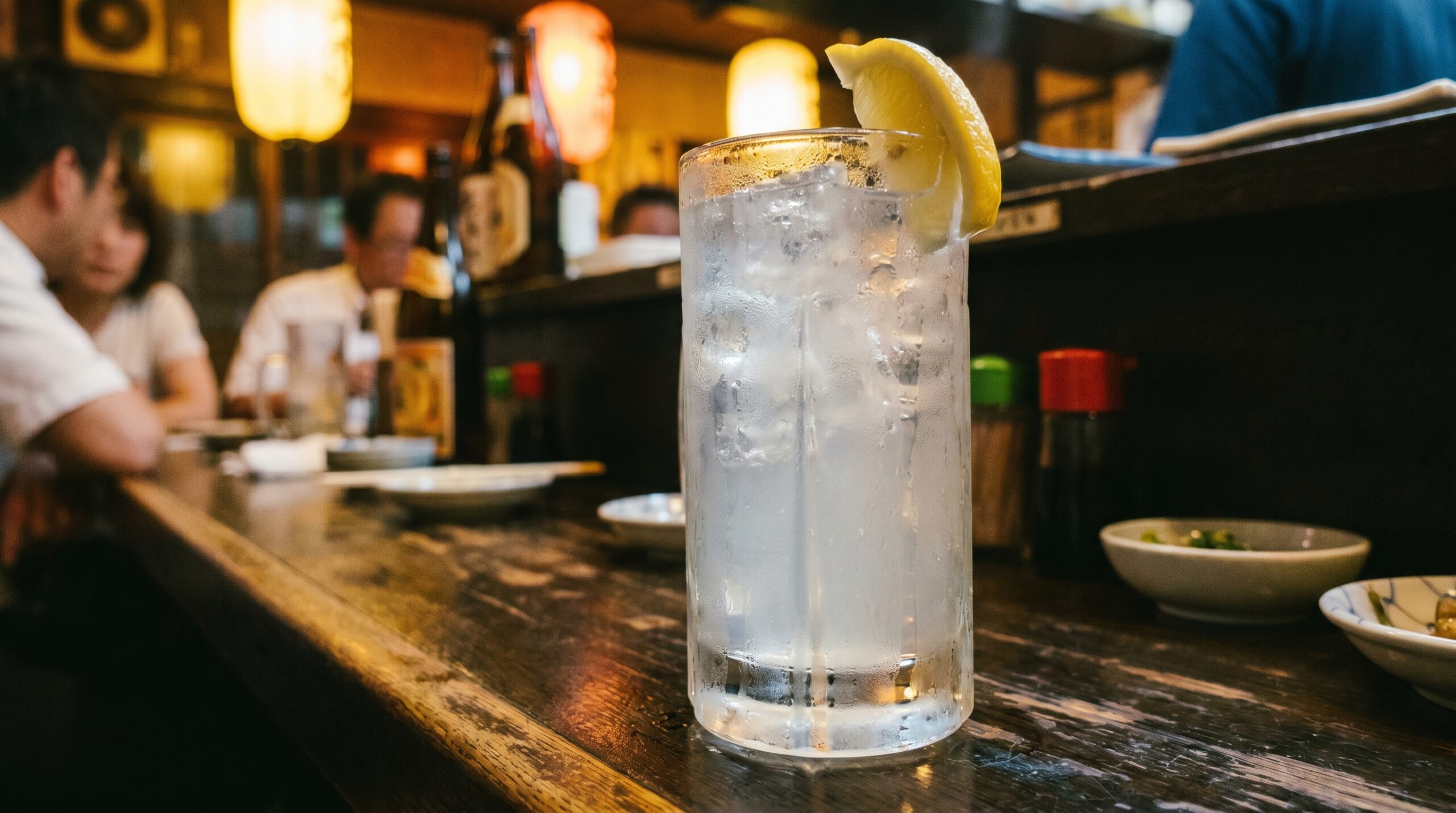
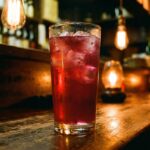
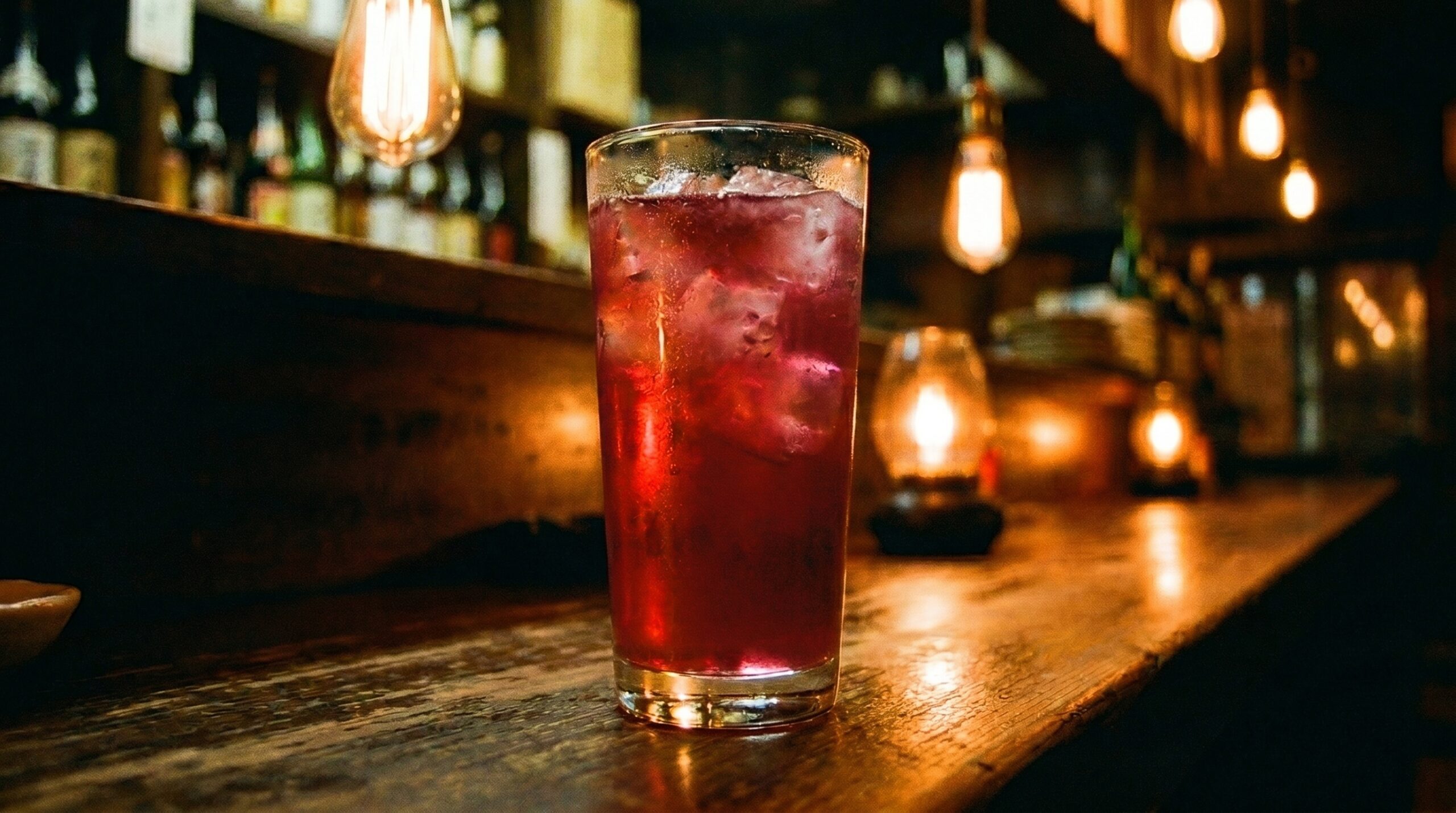
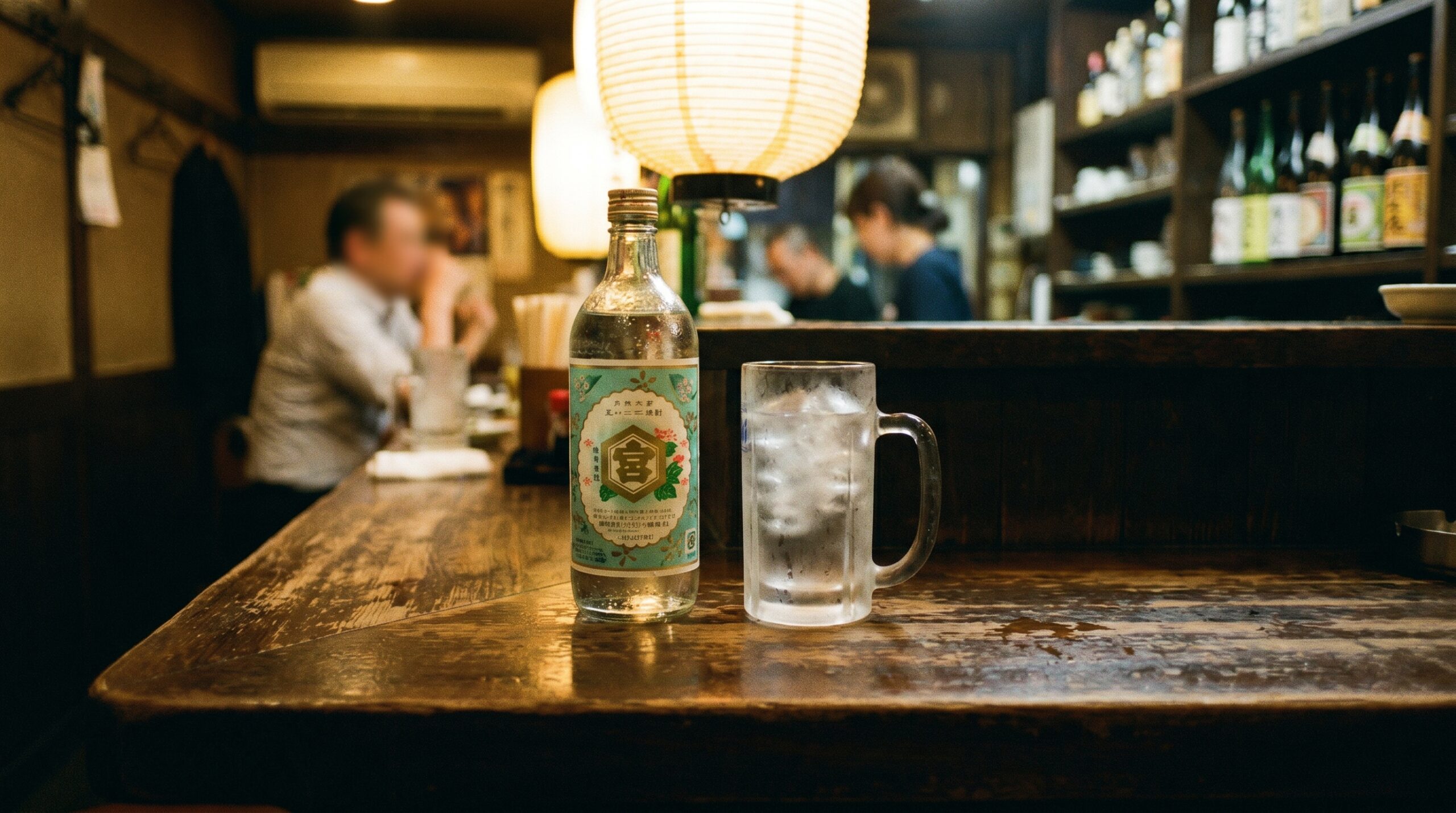
Lemon sour is shochu, soda water, and lemon juice over ice. That’s it. It became the default drink of the Japanese izakaya somewhere in the last twenty years — the thing you order when you don’t want to think about what to order, when you want something cold and not too strong that works with anything on the menu. Every place has it now. Every convenience store sells it in a can.
This is not a problem. It just means you have to pay attention to who makes it well.
レモンサワーは焼酎、炭酸水、レモン果汁を氷の上に注いだもの。それだけだ。過去20年のどこかで、日本の居酒屋のデフォルト飲料になった——何を頼むか考えたくないとき、冷たくてあまり強くなく、メニューの何にでも合うものが欲しいときに頼むもの。今はどこにでもある。コンビニでも缶で売っている。
これは問題ではない。ただ、誰がうまく作るかに注意を払う必要があるということだ。
The variables are small but they matter. Real lemon versus bottled concentrate — you can taste the difference immediately, a brightness versus a flatness. The ratio of shochu to soda: too much shochu and it becomes a chore; too little and you’re drinking expensive soda water. The ice — how much, how it affects dilution as the glass sits. Whether the glass was cold to begin with.
Nobody talks about this. The places that get it right don’t need to.
変数は小さいが重要だ。生のレモンかボトル入り果汁か——すぐに味でわかる、明るさと平坦さの違い。焼酎と炭酸の比率——焼酎が多すぎると仕事になる、少なすぎると高い炭酸水を飲んでいることになる。氷——量と、グラスが置かれた時間とともに薄まり方がどう変わるか。そもそもグラスが冷えていたかどうか。
誰もこの話をしない。正しく作る店は、語る必要がない。
I order lemon sour at new places the same way I order Hoppy: not because I especially want it, but because it costs the place almost nothing to do right and almost nothing to do wrong. Which way they go tells me things.
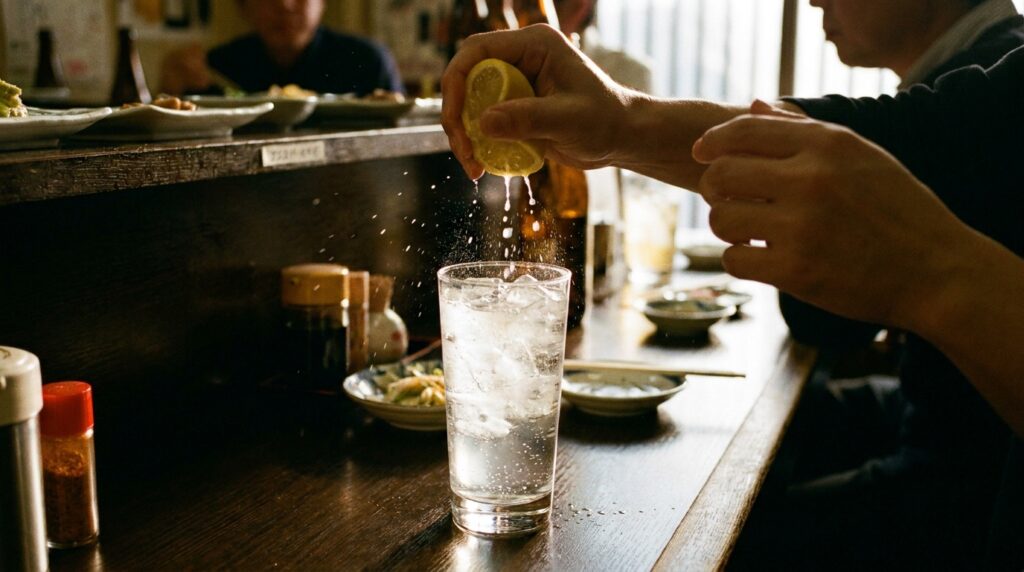
The Yotsuya place uses lemon from a small mesh bag kept by the glass. The place in Koenji squeezes it in front of you without being asked. I have been going to both for years.
初めての店でレモンサワーを頼むのは、ホッピーを頼むのと同じ理由だ——特に飲みたいわけではなく、正しく作るのも間違えるのも店にとってほとんどコストが変わらないから。どちらに転ぶかが教えてくれるものがある。
四谷の店はグラスの横に置いた小さなネットバッグのレモンを使う。高円寺の店は聞かれる前に目の前で絞る。どちらにも何年も通っている。

Leave a Reply