
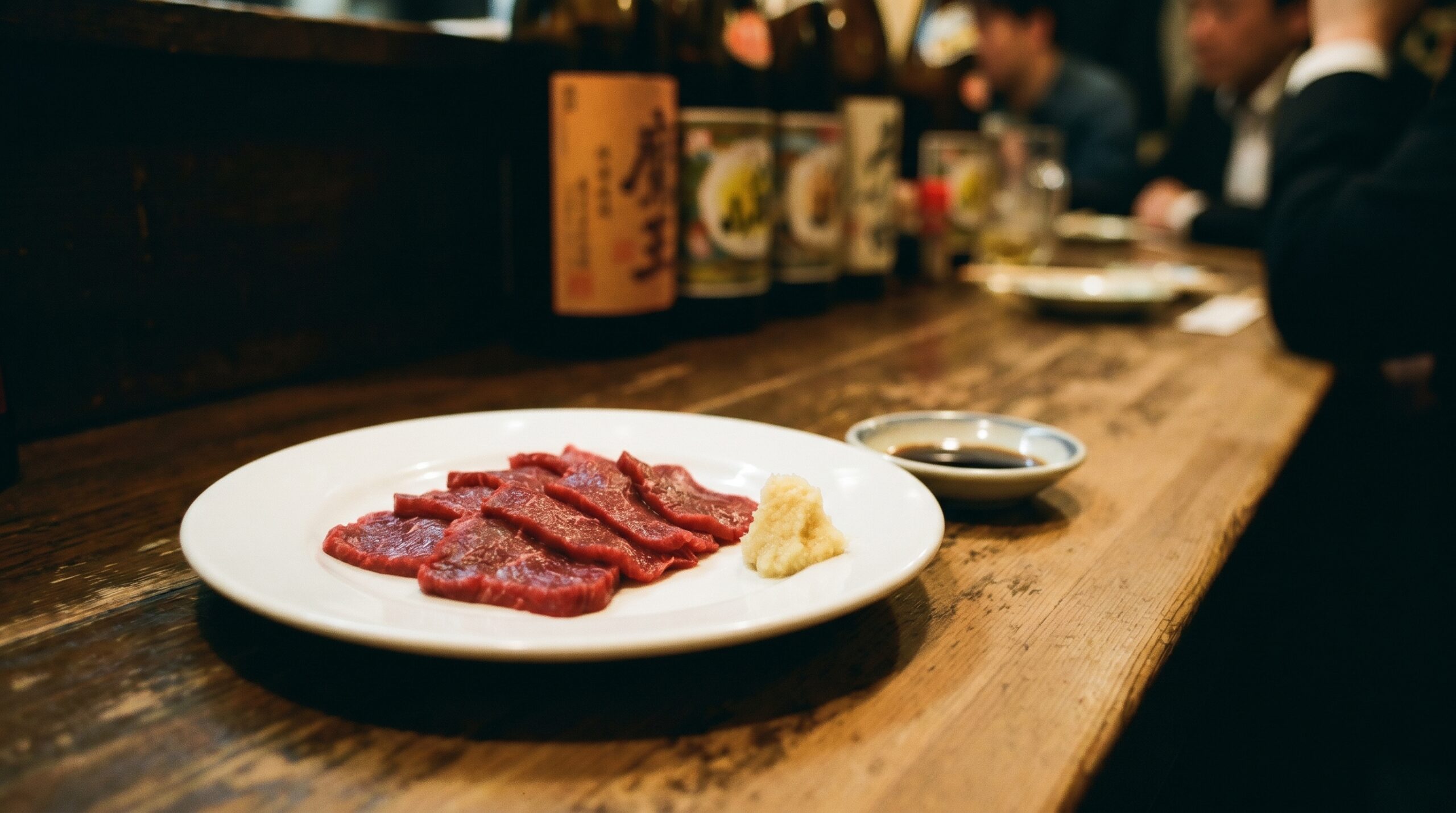
Basashi is raw horsemeat, sliced thin and served cold. It’s deep red — darker than beef, closer to tuna. The texture is firm but not tough. The flavor is lean and faintly sweet, with none of the iron weight you might expect. You eat it with grated ginger and soy sauce, sometimes garlic. You eat it in two or three bites per slice.
A place that does it right puts it in front of you without ceremony.
馬刺しは生の馬肉を薄く切って冷たい状態で出したもの。深い赤——牛より濃く、マグロに近い。歯ごたえはあるが固くない。味は淡泊でかすかに甘く、想像するような鉄っぽい重さはない。おろし生姜と醤油で食べる、ときにニンニクも。一切れを二口か三口で食べる。
正しく出す店は、何も言わずに目の前に置く。
Places that have basashi are not common. It traces to Kumamoto, Nagano, and Fukushima — the three regions with a specific history around horsemeat — and requires a supply chain that most small Tokyo izakayas don’t maintain. Some places use imported horsemeat, mainly from Canada or Argentina, which is cheaper and more available. Domestic or imported — when a place has it, they decided to have it. That decision comes with accountability. Bad basashi is not a small failure.
馬刺しを置いている店は少ない。熊本、長野、福島に由来する——馬肉に固有の歴史を持つ三つの地域——で、ほとんどの東京の小さな居酒屋が維持しない仕入れルートが必要だ。カナダやアルゼンチンなどからの輸入馬肉を使う店もある——安く、入手しやすい。国産でも輸入でも、置いている店は置くことを決めた。その決断には責任が伴う。悪い馬刺しは小さな失敗ではない。
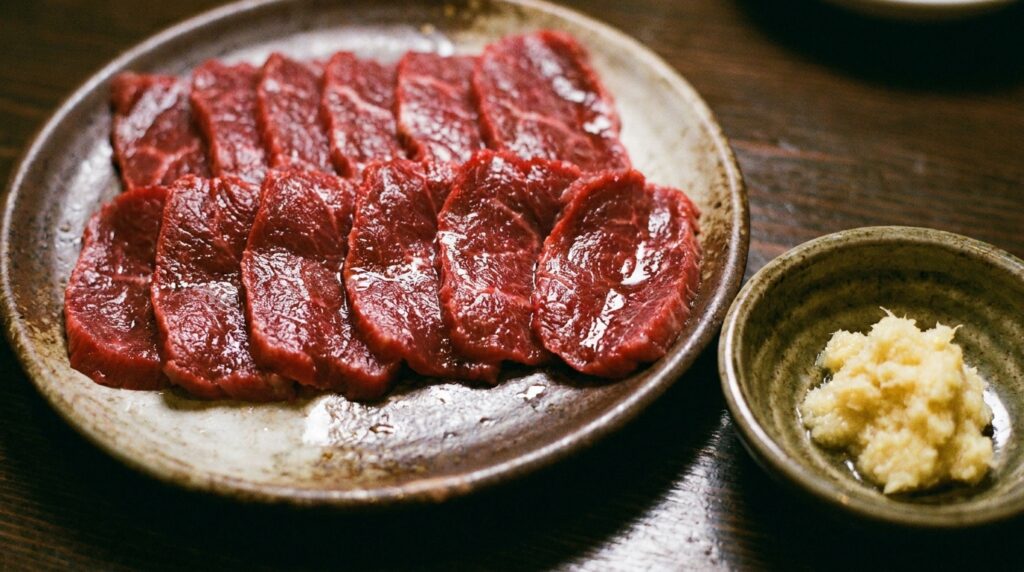
The place in Yotsuya gets it from Kumamoto. I know this because I asked once, and the owner told me without making a production of it — the way people talk about things they’ve already decided aren’t worth arguing about. The slices are thick enough to have texture, thin enough to stay cold all the way through. The ginger is freshly grated, not from a tube.
These details are not accidents.
四谷の店は熊本から仕入れている。一度聞いたら、大将が大げさにならずに教えてくれた——もう議論する気のないことについて人が話すときのように。切り方は食感が残る厚さで、最後まで冷たいままの薄さ。生姜はチューブではなく、その場でおろしたもの。
こういう細部は偶然ではない。

Leave a Reply