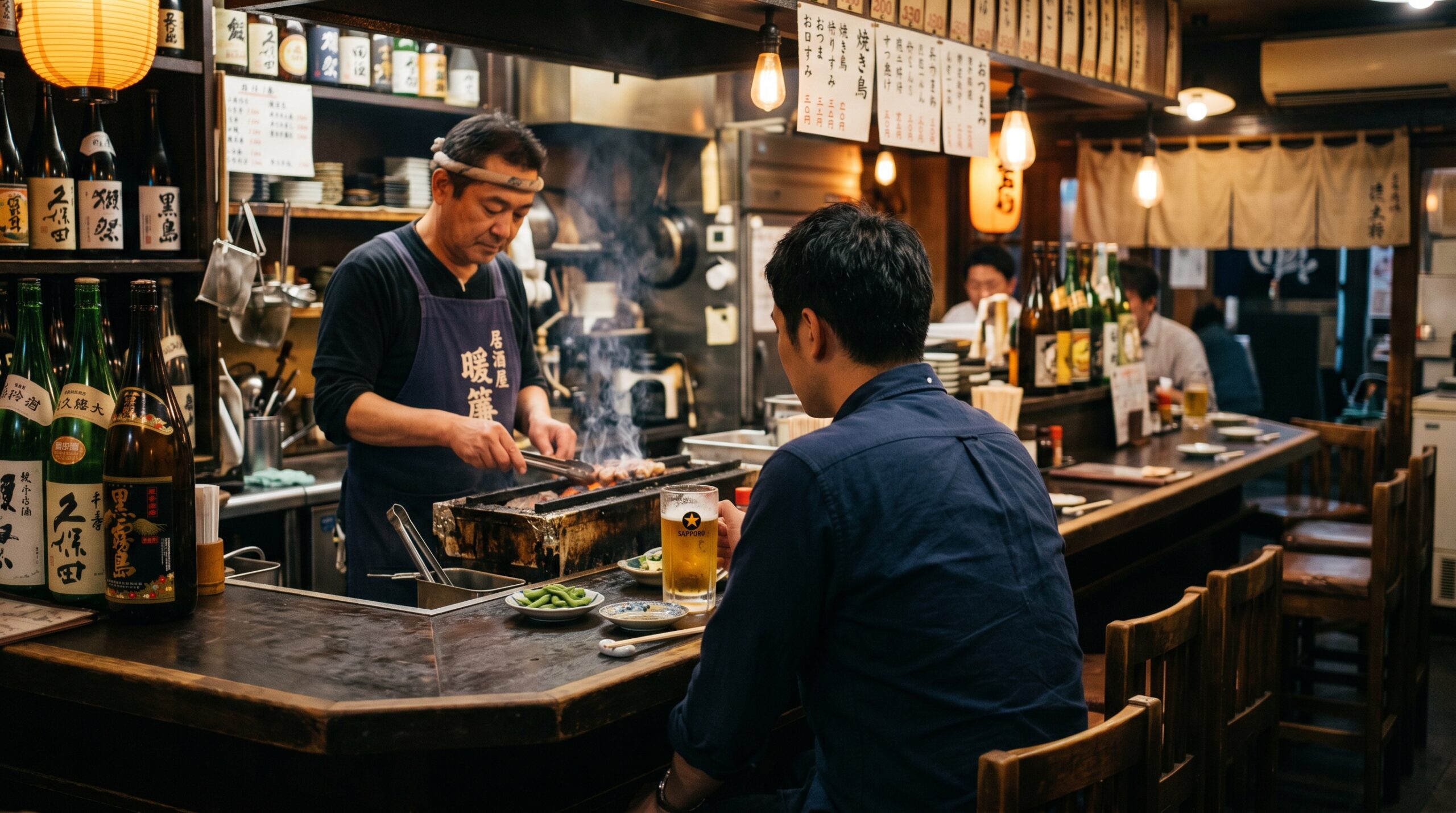
A man sits at the counter. He’s been there since six — I know because I arrived at six-fifteen and he was already on his second beer. He hasn’t spoken to anyone except to order. He’s not reading his phone. He’s not reading anything. He’s just sitting there, eating slowly, drinking at a pace that suggests he has nowhere to be.
He doesn’t look like he’s waiting for someone.
He looks like he’s exactly where he wants to be.
男がカウンターに座っている。6時からいる——私が6時15分に来たとき、すでに2杯目だったからわかる。注文以外、誰とも話していない。スマホも見ていない。何も読んでいない。ただそこに座って、ゆっくり食べ、急ぐ理由のないペースで飲んでいる。
誰かを待っているようには見えない。
ここにいたくてここにいる人間の顔をしている。
I’ve had this question from people outside Japan: doesn’t it feel lonely, drinking alone? The question assumes that drinking is a social act — something you do *with* people, and that doing it without them means something is missing.
In Japan, that assumption doesn’t quite hold.
日本の外にいる人から、こう聞かれることがある。一人で飲むのは寂しくないか、と。その質問は、飲むことは社会的な行為——誰かと一緒にするものであり、一人でするのは何かが欠けているという前提に立っている。
日本では、その前提はあまり当てはまらない。
*Hitori nomi* — drinking alone — is not a consolation prize. It’s not what you do when your friends cancel, or when you’ve had a bad day and can’t face company. For many Japanese men, it’s a deliberate practice. Something you protect space for in your schedule.
一人飲みは、慰め賞ではない。友人に断られたときや、ひどい一日で誰かと顔を合わせたくないときにするものではない。多くの日本人男性にとって、意図的な習慣だ。週に一度の儀式。スケジュールの中に意識して空白を作るもの。
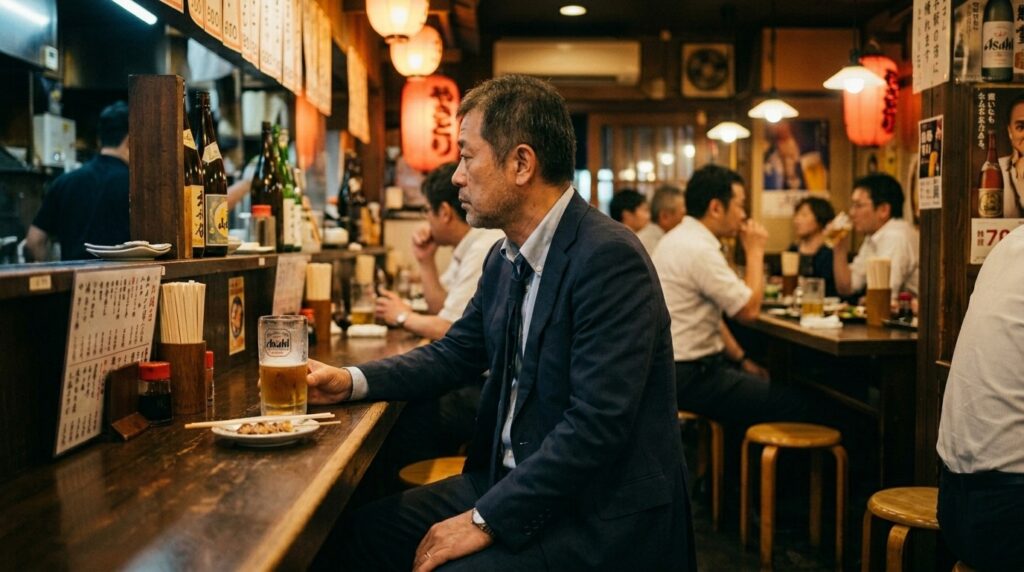
The Japanese word is *kaifuku* — recovery. Not from illness. From the accumulated weight of the day. The meetings where you said the right thing instead of what you thought. The calls where you managed someone else’s anxiety. The commute where you stood for forty minutes holding a handle above your head, surrounded by strangers.
The izakaya absorbs all of that. The counter is where you decompress.
一番近い言葉は「回復」だ。病気からの回復ではない。一日の蓄積された重さからの回復。思ったことではなく正しいことを言った会議。誰かの不安をマネジメントした電話。見知らぬ人に囲まれて40分間、頭の上の吊り革を握り続けた通勤。
居酒屋がそのすべてを吸収する。カウンターが、減圧の場所だ。
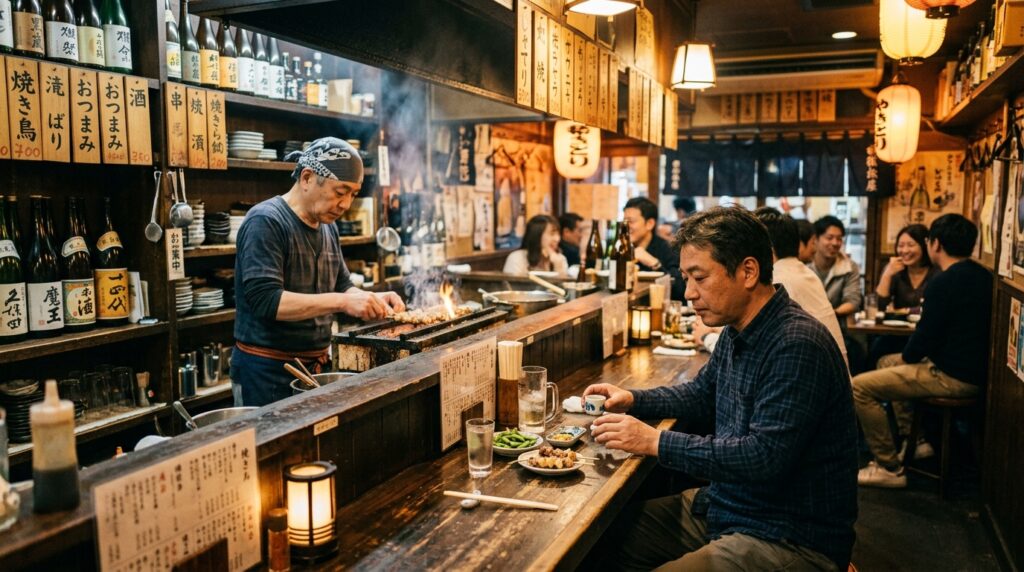
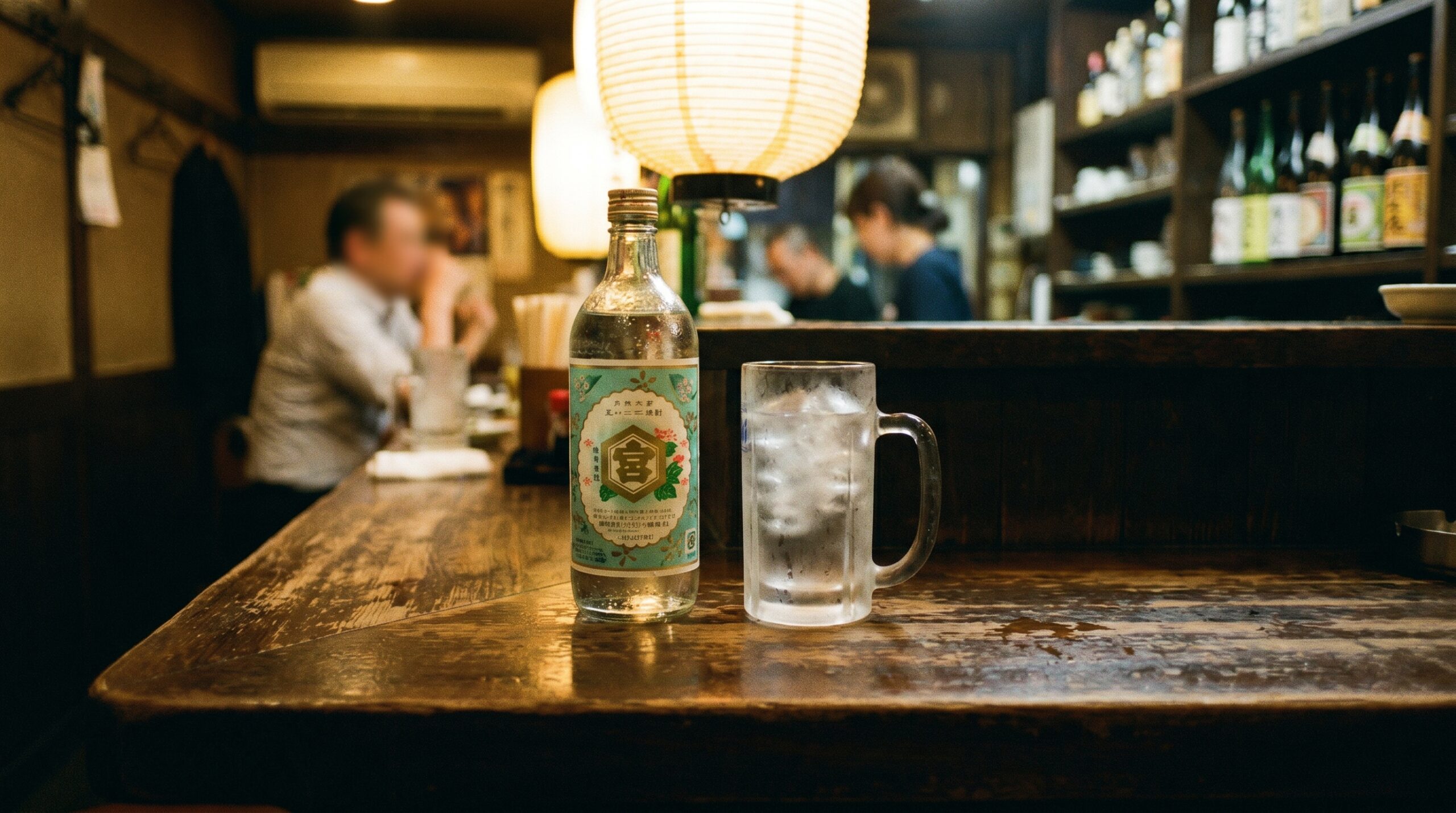
The design of the space matters. A counter that faces a wall doesn’t work — you need something to look at, something happening in front of you, without the obligation of participating in it. The owner cooking, moving, occasionally glancing up. The sound of other people at a comfortable distance. The smell of charcoal, soy, cold beer.
You’re not alone in the room. You’re just not required to be social in it.
だから空間の作りが大事になる。壁に向かうカウンターでは機能しない——目の前に何かが起きていて、でも参加を求められない何かが必要だ。大将が料理して、動いて、時折ちらりとこちらを見る。ちょうどいい距離で他の人の気配がある。炭と醤油と冷えたビールの匂い。
部屋に一人ではない。ただ、そこで社交を求められていない。その違いがすべてだ。
I’ve been doing this for twelve years across three cities. Nagoya, Fukuoka, Tokyo. Different places, same practice. On the nights I skip it — when I go straight back to the apartment, eat something standing at the kitchen counter — I sleep worse. The weight doesn’t go anywhere. It just sits there until morning.
12年間、3つの街でこれを続けてきた。名古屋、福岡、東京。場所は違っても、習慣は同じだ。これを飛ばした夜——まっすぐアパートに帰って、台所のカウンターで何かを立って食べる夜——は、眠りが浅い。重さはどこにも行かない。朝までそこにある。
The man at the counter finished his food, paid, and left without ceremony. He’d been there for about ninety minutes.
He looked lighter going out than coming in.
That’s the whole thing, really.
カウンターの男は食べ終えて、何でもないように支払って出ていった。90分くらいいた。
来たときより、帰りの方が軽く見えた。
それが、全部だ。


Leave a Reply