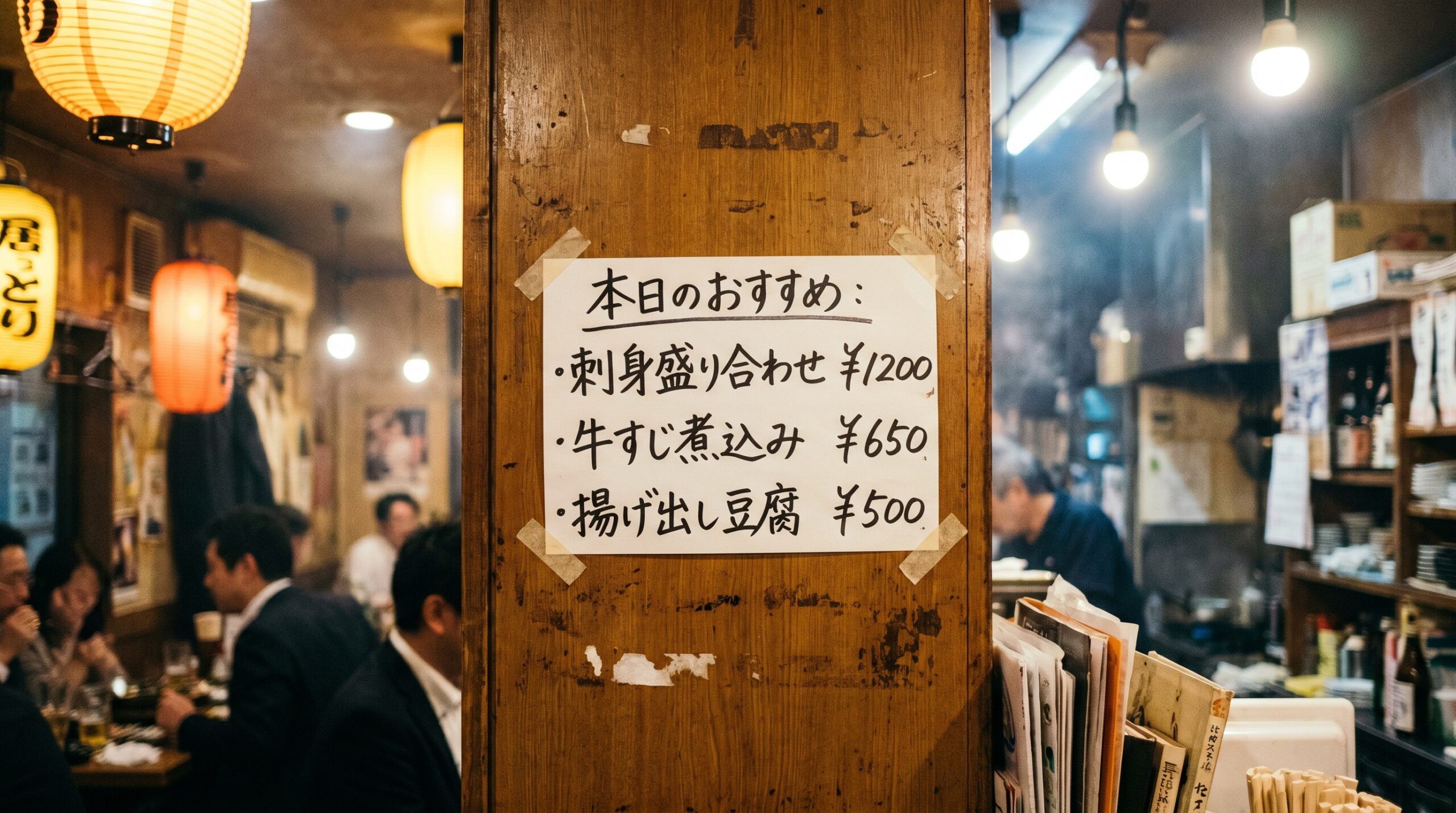
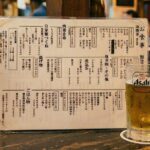
On the wall, a small piece of paper. Three items written in marker, slightly rushed — the kind of handwriting that happens when someone is already thinking about the next thing they need to do. One item is a fish I don’t recognize. The price is handwritten beside it in the same ink.
I order it. This is almost always the correct decision.
壁に、小さな紙がある。マーカーで3品書かれている、少し急いだ字で——次にやることをもう考えながら書く人間の字だ。一品は見たことのない魚だ。値段が同じインクで横に書かれている。
それを頼む。これはほぼ必ず正しい判断だ。
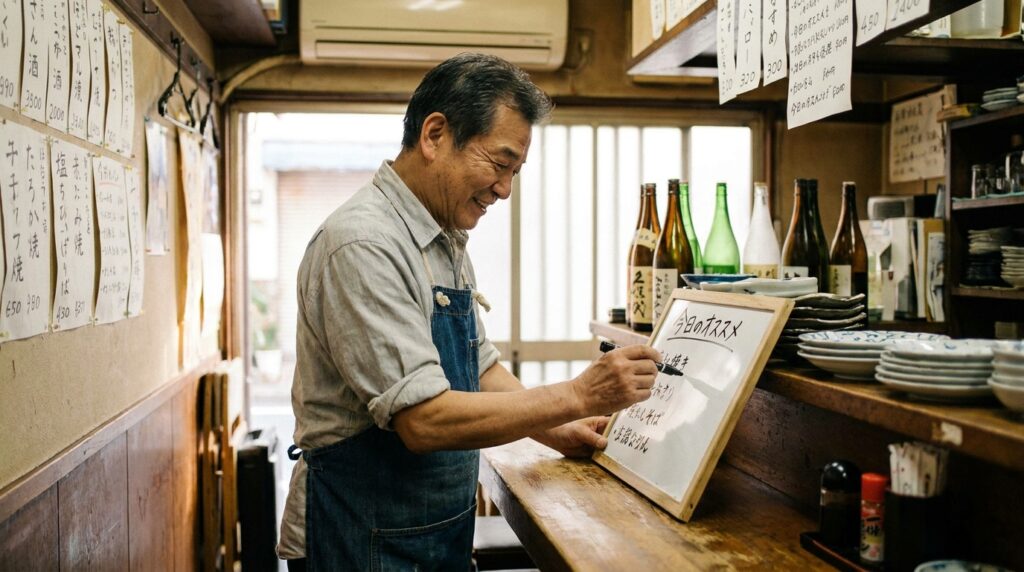
The handwritten specials board tells you what the owner was thinking about when they went to the market this morning. It’s a direct line from the kitchen’s judgment to your table. The owner saw something good — a fish that was moving too fast to be ignored, vegetables that arrived better than expected — and wrote it down. The board is not marketing. It’s a recommendation from someone who knows more about food than you do, to someone who has already agreed to trust them.
手書きのボードは、店主が今朝市場に行ったときに何を考えていたかを教えてくれる。厨房の判断からテーブルへの直通回線だ。店主は何か良いものを見た——無視できないほど活きのいい魚、思ったより良い状態で届いた野菜——そして書いた。ボードはマーケティングではない。あなたより食材を知っている人間から、すでに信用することに同意した人間への推薦だ。
The laminated menu is a promise: this dish will be available, it will look like this photo, it will cost this price. The handwritten board makes no promises. When it’s gone, it’s gone. That’s a feature, not a flaw. It means what’s on the board was good enough to put up today, and limited enough to run out.
Order from the board. Order it first, before you look at anything else.
ラミネートメニューは約束だ。この料理は提供できる、写真のように見える、この値段だ。手書きのボードは何も約束しない。なくなったら終わりだ。その制約は機能だ。今日ボードに出ているということは、今日出すほど良いということで、売り切れるほどしかないということだ。
ボードから注文する。他の何かを見る前に、まずそれを頼む。
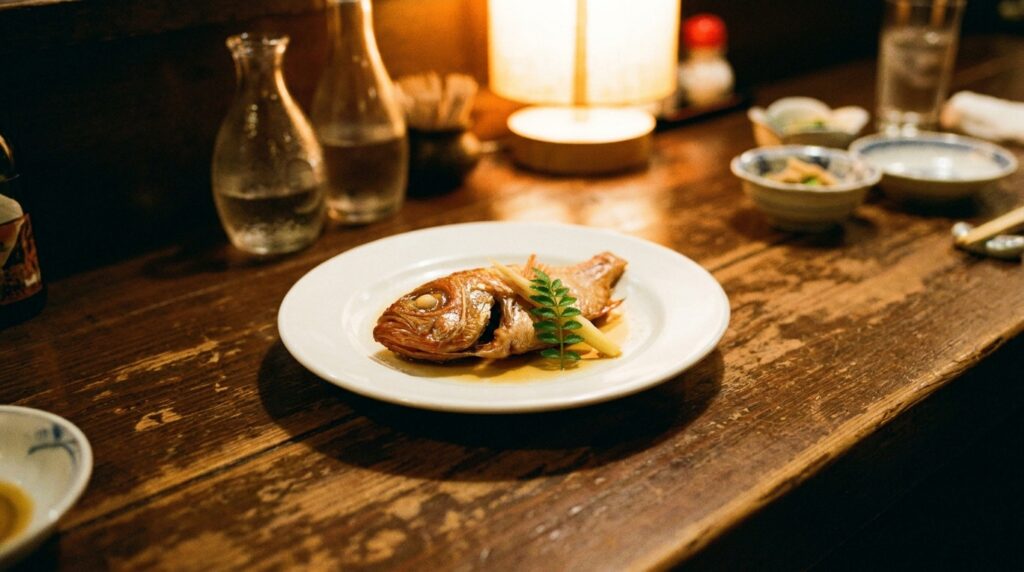
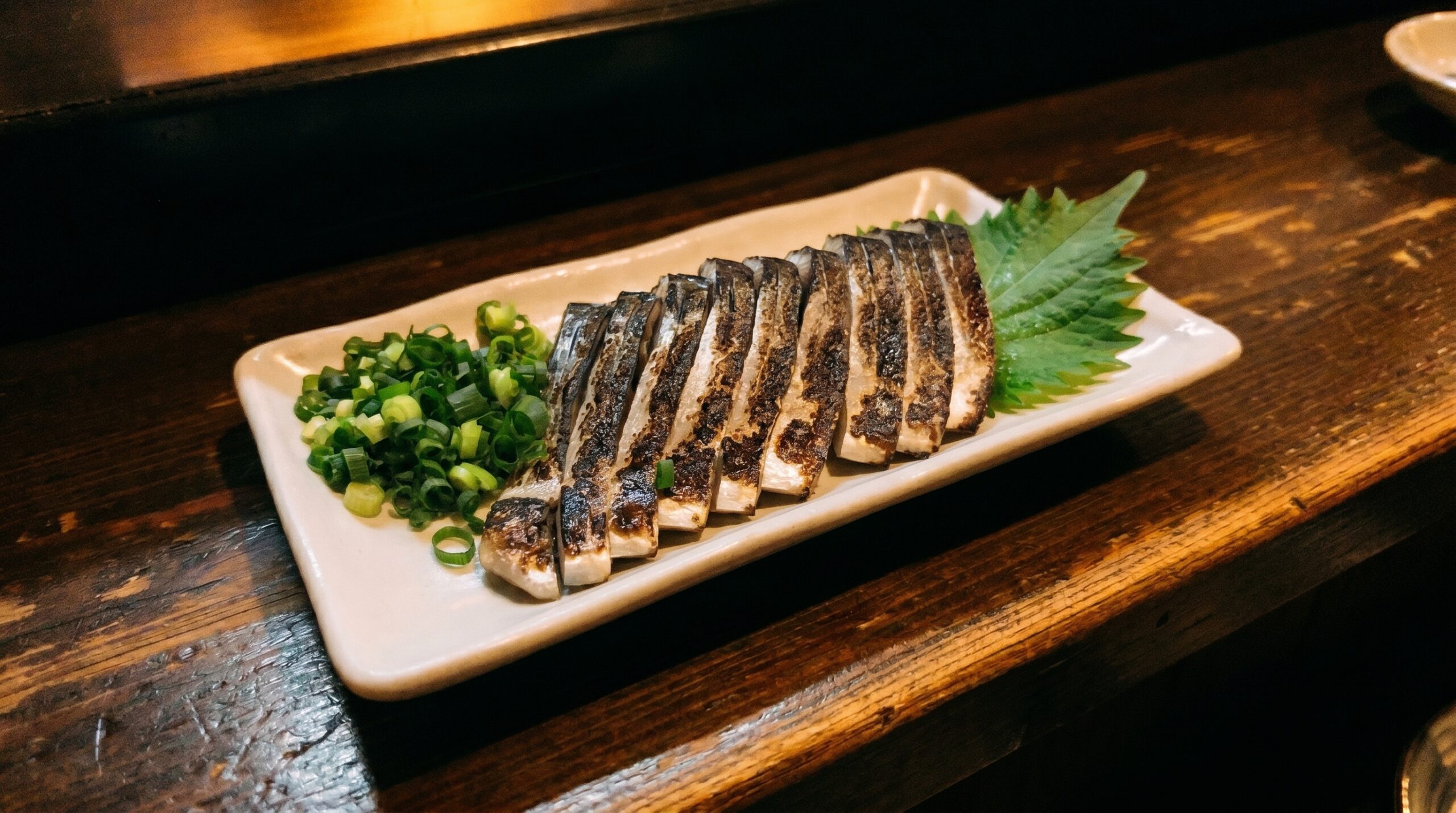
The fish I didn’t recognize turned out to be kinmedai — golden eye snapper, caught that morning according to the owner. It was the best thing I ate that week.
It was not on the printed menu. It was never going to be on the printed menu.
見たことがなかった魚は金目鯛だった——その朝獲れたと大将が言った。その週に食べた中で一番うまかった。
印刷されたメニューにはなかった。そこに載ることは永遠にない。

Leave a Reply