Photo menus exist to make ordering easy. You look at the picture, you point at what you want, you get something close to what you expected. For a tourist, this is invaluable. For a chain restaurant trying to manage consistency across hundreds of locations, this is essential.
写真メニューは注文を簡単にするためにある。写真を見て、欲しいものを指さして、期待に近いものが来る。観光客には価値がある。何百店舗もにわたって一貫性を管理しようとするチェーン店には不可欠だ。
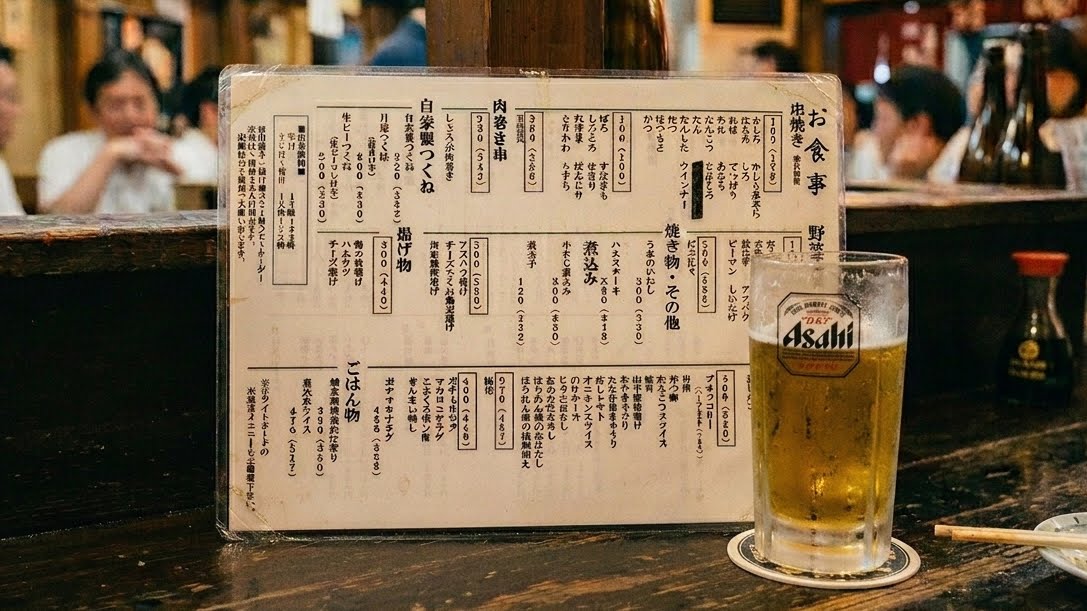
A text-only menu — just the name of the dish and the price — assumes something about the customer. It assumes you already know what sunagimo is, or that you’re willing to ask. It assumes you don’t need to be sold on the idea of eating here; you’ve already decided to trust the place enough to order blind. The menu isn’t marketing. It’s just information.
文字だけのメニュー——料理名と値段だけ——は、客について何かを前提としている。砂肝が何かすでに知っているか、聞く意志があることを前提とする。ここで食べることに売り込まれる必要はなく、目隠しで注文するくらいにはその店を信用することを決めていることを前提とする。メニューはマーケティングではない。ただの情報だ。
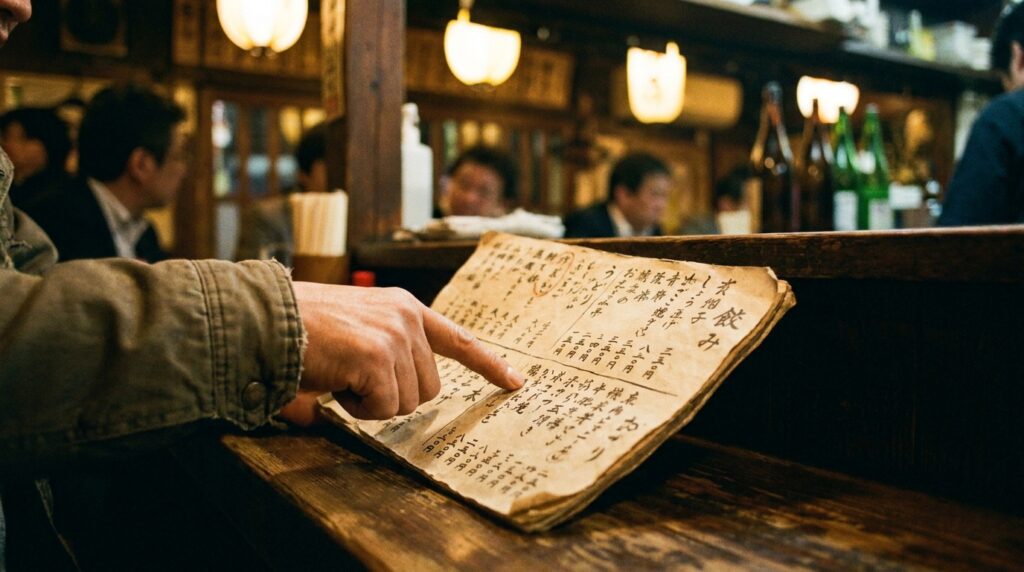
There’s also a practical reason. The photo menu commits you to a fixed product — what you photograph is what you serve, every time, regardless of what came in fresh that morning. The text-only menu is flexible. Tonight’s sashimi is whatever was good at the market. Tonight’s special isn’t on the menu at all — it’s on a white board to the wall, or the owner tells you when you sit down.
The absence of photos often means the menu changes. Which means the kitchen is paying attention to what’s available, not just what’s been photographed.
実用的な理由もある。写真メニューは固定された商品を約束する——撮影したものを、毎回、その朝の仕入れに関係なく提供する。文字だけのメニューは柔軟だ。今夜の刺身は、市場で良かったものだ。今夜の特別メニューはメニューにない——壁のホワイトボードか、座ったときに大将が教えてくれる。
写真がないことは、メニューが変わることを意味することが多い。つまり厨房が、撮影されたものではなく、今日手に入るものに目を向けているということだ。
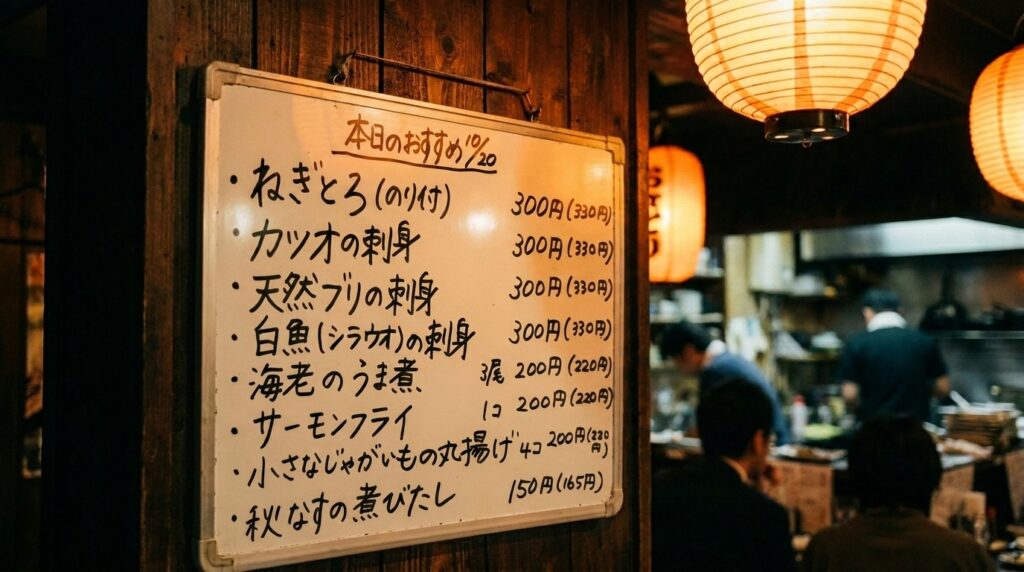
I’ve ordered things I couldn’t read many times. I point at the kanji and say *kore* — this one. Or I ask the owner what’s good tonight. This works better than a photo menu, because the answer is usually true.
読めないものを何度も注文してきた。漢字を指さして「これ」と言う。あるいは今夜は何が良いか大将に聞く。これは写真メニューより上手くいく。答えがたいてい本当のことだから。


Leave a Reply