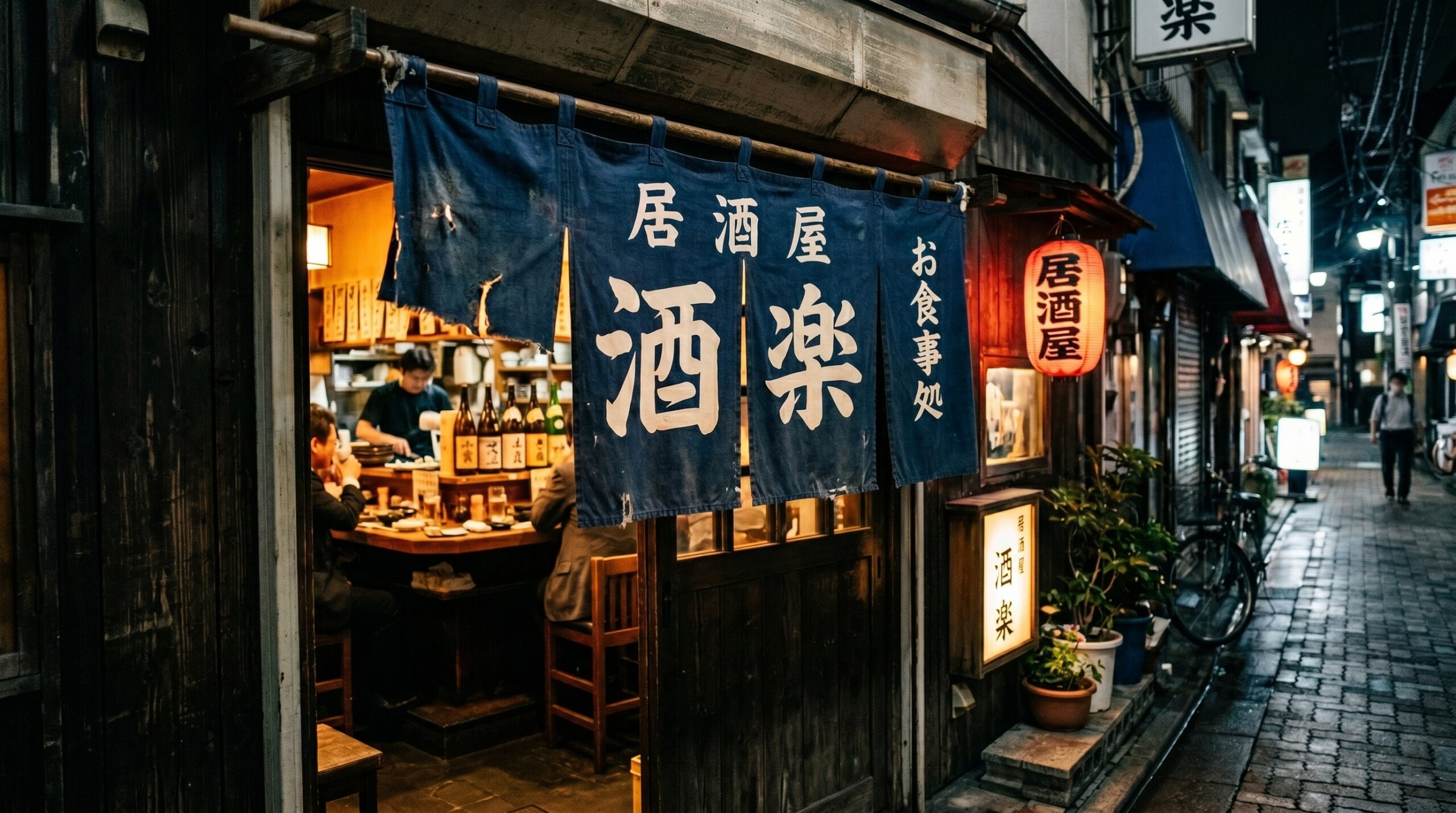
When it’s hanging there, the place is open. When the owner takes it in for the night, it’s closed. No sign needed. No posted hours. The curtain is the signal.
But it’s not just a signal.
掛かっているとき、店は開いている。店主が夜しまうとき、閉まっている。看板は要らない。営業時間の掲示も要らない。暖簾がサインだ。
でもそれだけではない。
The street is public — anyone can stand there. The inside of the izakaya is semi-private — not a home, but not fully public either. It’s a managed space. Pushing through the noren is a small act of entry into something that has its own rules, its own atmosphere, its own version of normal.
You’re not just walking through a door. You’re crossing something.
通りは公共だ——誰でもそこに立てる。居酒屋の中は半私的だ——自宅ではないが、完全に公共でもない。管理された空間だ。暖簾をくぐることは、独自のルール、独自の雰囲気、独自の「普通」を持つ何かへの入場という小さな行為だ。
ただドアを通るのではない。何かを越えている。
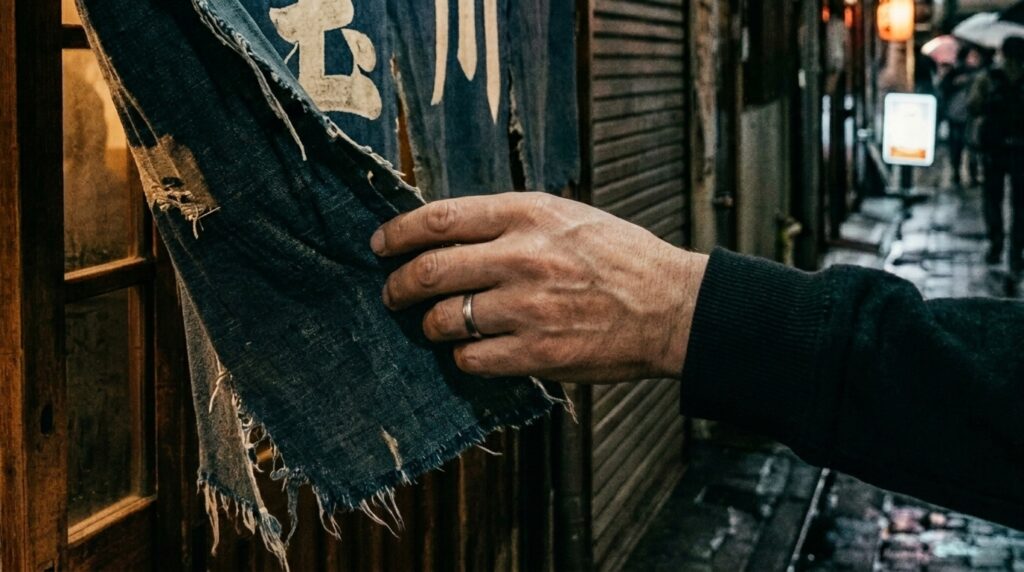
I’ve learned to read noren. A crisp, new one usually means a newer place — well-intentioned, possibly good, still finding itself. A faded one, with wear at the edges where hundreds of hands have parted it over the years, tells you the place has lasted. Longevity in the izakaya world is not given. It’s earned, customer by customer, night by night.
When I see a well-worn noren, I slow down and look in.
暖簾を読むようになった。ぱりっとした新しいものは、新しい店が多い——志は良く、たぶん良い店で、まだ自分を探している。端が擦り切れて、何年もかけて何百もの手がくぐった跡のあるものは、その店が続いてきたことを教えてくれる。居酒屋の世界での長続きは、与えられるものではない。客一人ずつ、夜一夜ずつ、稼ぐものだ。
使い込まれた暖簾を見ると、足を止めて中を覗く。
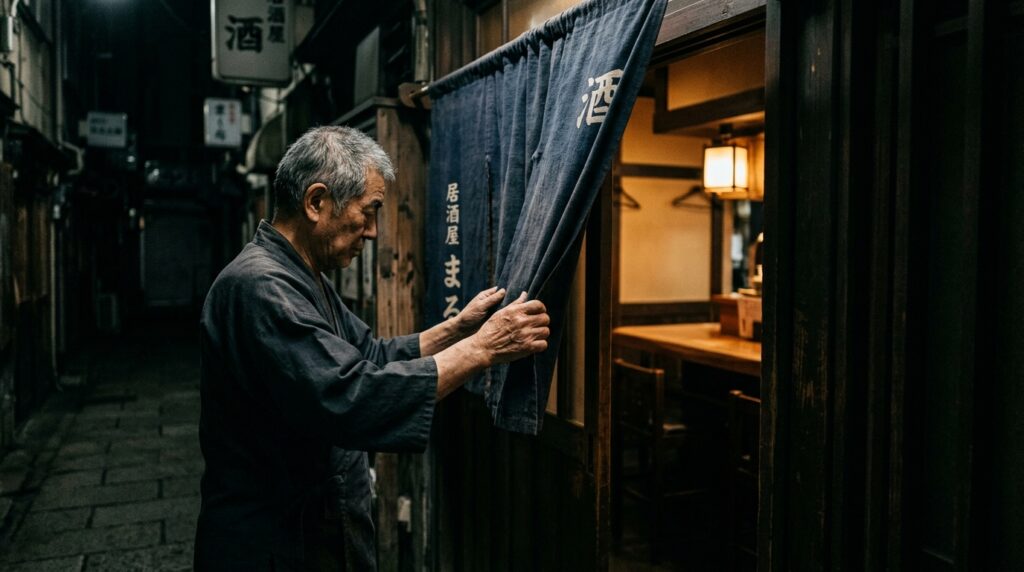
There’s also this: when the noren comes in, the evening is over. The owner doesn’t announce last call with words. The noren disappears. If you’re already inside, you can stay a little longer. But the outside world has been officially closed off. What remains inside is just the people still there, and the quiet work of finishing.
I’ve been the last one inside a few times. It’s a good feeling.
もう一つある。暖簾がしまわれると、その夜は終わりだ。大将はラストオーダーを言葉で告げない。暖簾が消える。すでに中にいれば、もう少しいられる。でも外の世界は公式に締め出された。残るのは、まだそこにいる人たちと、静かな締めくくりの作業だけだ。
最後の一人になったことが何度かある。いい気分だ。








Leave a Reply