
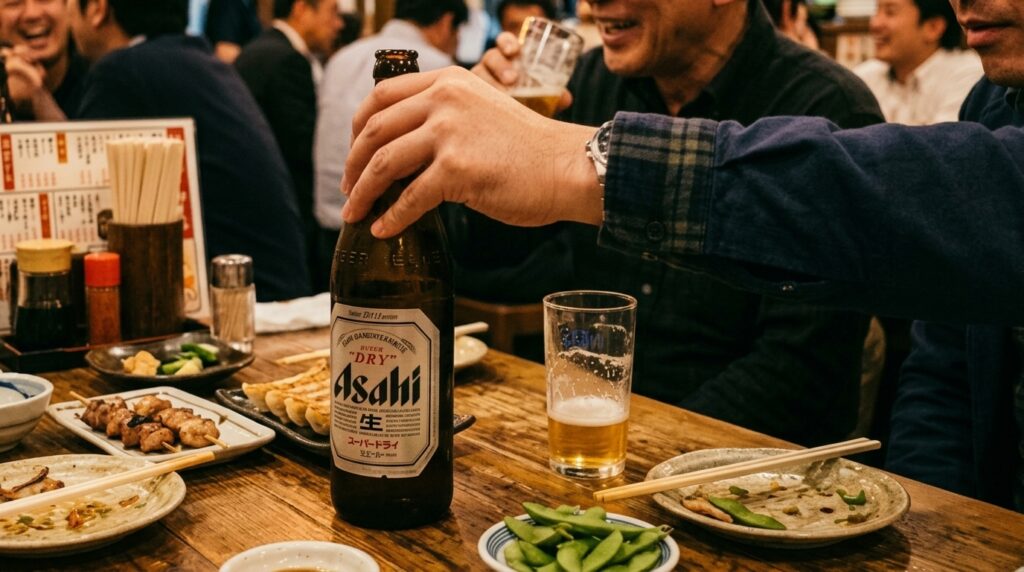
His glass was empty. He reached for the bottle himself, poured, set it back down. The table went slightly quiet — not dramatically, not obviously. Just a fraction of a degree cooler. He didn’t notice immediately. But he noticed eventually.
He’d been transferred from overseas. Three months in Tokyo. Still learning.
彼のグラスが空になった。自分で瓶に手を伸ばして注いで、戻した。テーブルが少し静かになった——劇的にではなく、露骨にでもなく。ほんの少し、温度が下がった。彼はすぐには気づかなかった。でも最終的には気づいた。
海外からの転勤者だった。東京3ヶ月目。まだ学んでいる最中だった。
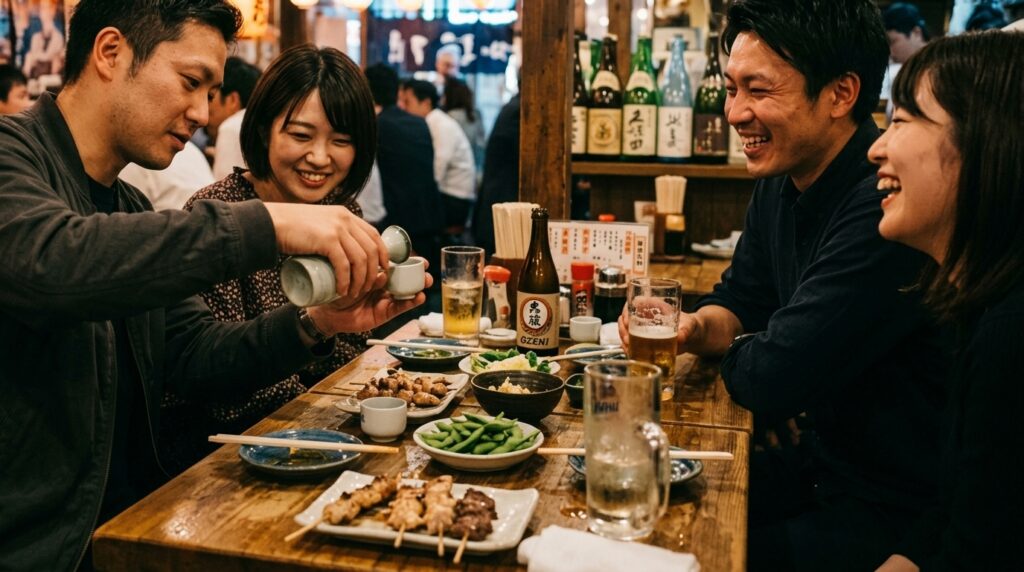
Oshaku is the practice of pouring for others rather than yourself. At a Japanese group table, you keep an eye on everyone’s glass. When someone is running low, you pour for them. You don’t announce it. You don’t ask if they want more — asking can put someone in an awkward position if they don’t, and most people won’t say no directly. You read the glass, you pour, you move on.
In return, someone will pour for you. That’s the system.
お酌とは、自分ではなく他の人のために注ぐ習慣だ。日本のグループの席では、全員のグラスに目を配る。誰かが少なくなってきたら注ぐ。宣言しない。もっと飲みますかとも聞かない——聞くことは、飲みたくない人を難しい立場に追い込みかねないし、たいていの人は直接断らない。グラスを読んで、注いで、次に移る。
代わりに、誰かが自分のために注いでくれる。それがシステムだ。
Pouring for yourself signals, at minimum, inattention — you’ve failed to notice that nobody else noticed your glass. At worst, it reads as indifference to the group. The act of self-pouring breaks the circuit. Everyone is supposed to be taking care of everyone else. When you do it yourself, you step outside the system.
It’s not a catastrophe. But it’s a small refusal.
自分で注ぐことは、最低でも不注意を示す——他の誰も自分のグラスに気づかなかったことに気づかなかった、ということだ。最悪の場合、グループへの無関心として読まれる。自分で注ぐ行為は、回路を切る。全員が互いの面倒を見ることになっている。自分でやると、そのシステムの外に出る。
致命的ではない。でも小さな拒否だ。
The exception: if you don’t want more, a small gesture — hand lightly over the glass, or a quiet “daijōbu desu” — will stop the pour before it starts. No offense given, none taken. The system has a polite exit built in.
The transferred colleague learned. By the end of the evening, he was watching the glasses. It didn’t take long.
例外がある。これ以上要らない場合、小さなしぐさ——グラスにそっと手をかざすか、静かな「大丈夫です」——で注がれる前に止められる。失礼はない。受け取る側もない。システムには丁寧な出口が組み込まれている。
転勤してきた同僚は学んだ。夜が終わる頃には、グラスを見ていた。時間はかからなかった。






Leave a Reply