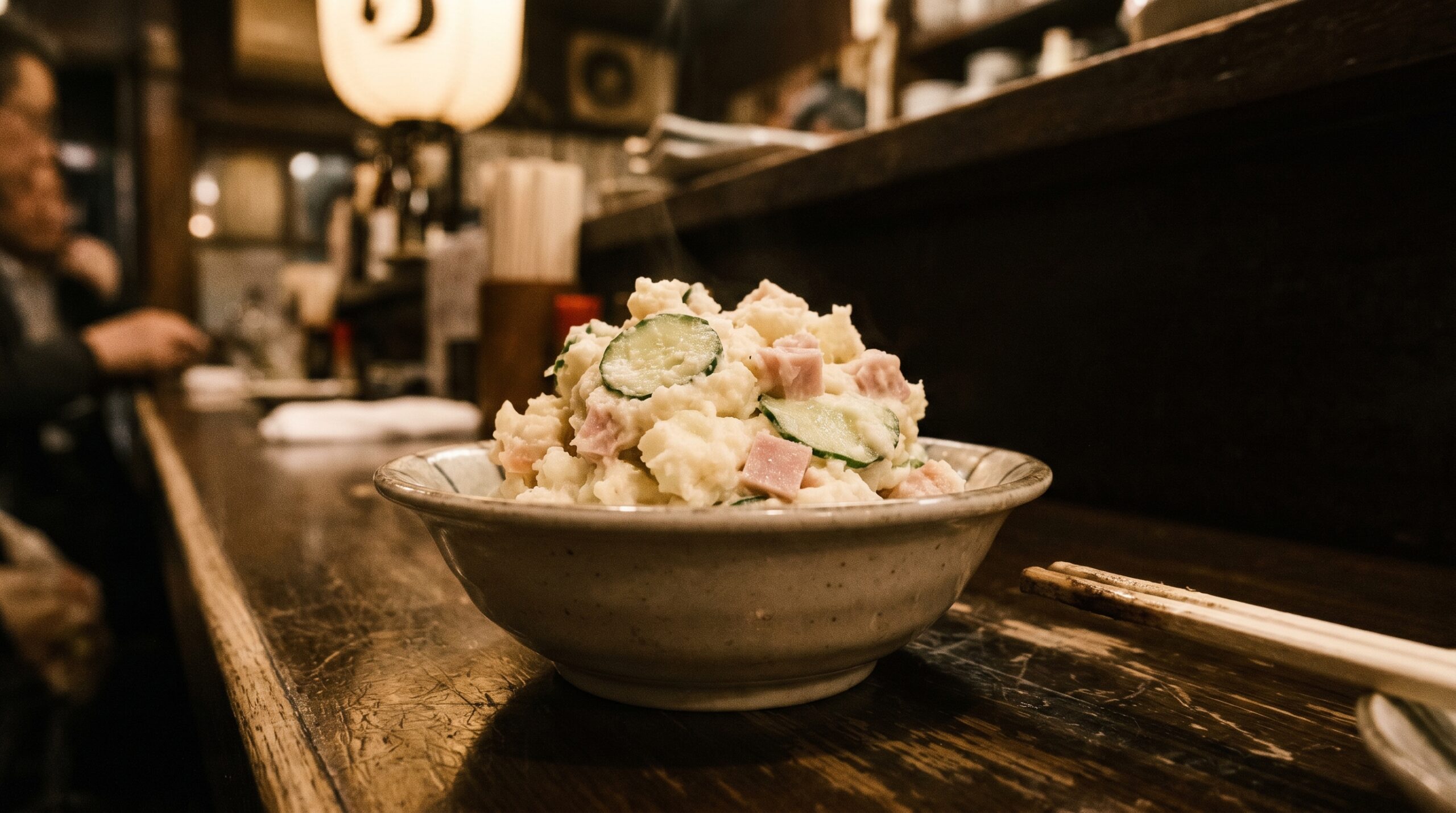
Potato salad — potesara — is on every izakaya menu. It’s not an interesting dish. It’s boiled potato, mayonnaise, cucumber, sometimes ham, sometimes egg, sometimes a few other things depending on who’s making it. It costs almost nothing and it keeps. It’s the first thing people order when they sit down and the beer hasn’t arrived yet.
And yet no two are the same.
ポテトサラダは——ポテサラは——どの居酒屋のメニューにもある。面白い料理ではない。茹でたじゃがいも、マヨネーズ、きゅうり、ときにハム、ときに卵、作る人によってほかにも何か入れる。原価はほとんどかからず、保つ。座って、まだビールが来ていないときに最初に頼むものだ。
それでも、どこも同じではない。
The variables accumulate. How much the potato is mashed versus left chunky — a kitchen that leaves some texture is making a different statement than one that mashes it smooth. The ratio of mayonnaise: too much and it becomes a delivery system for mayonnaise; too little and it’s dry and ungenerous. Whether it’s served cold from the refrigerator or at room temperature, which changes everything about how the flavors sit.
A kitchen that has made potesara for twenty years has opinions.
変数が積み重なる。じゃがいもをどれだけ潰すか、どれだけ塊を残すか——食感を残すキッチンは、滑らかに潰すキッチンとは違うことを言っている。マヨネーズの比率——多すぎるとマヨネーズを運ぶ手段になる、少なすぎると乾いて貧相になる。冷蔵庫から冷えたまま出すか、室温で出すか——これが風味のまとまり方を全部変える。
20年ポテサラを作ってきたキッチンには意見がある。
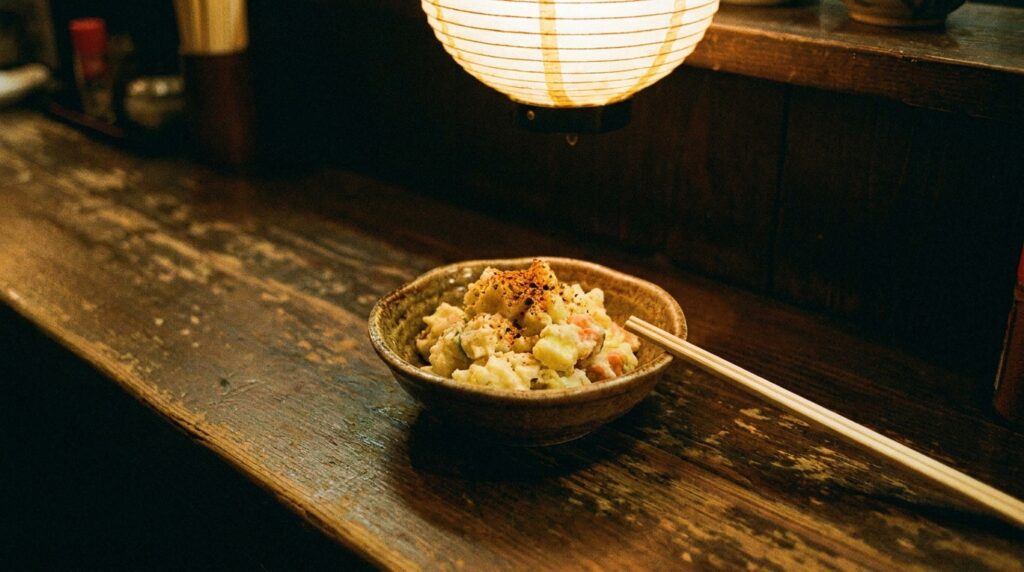
The version at the Yotsuya place has a noticeable amount of karashi — Japanese mustard — mixed in. Not enough to make it sharp, just enough to give it a back note that you notice after the first bite. I didn’t notice it for six months. When I finally did, I understood that I’d been eating a considered thing without paying attention.
四谷の店のポテサラには、からし——和からし——がかなり混ざっている。辛くなるほどではなく、一口目の後で気づく後味を与えるくらい。半年気づかなかった。ようやく気づいたとき、ずっと考えられたものを注意を払わずに食べていたとわかった。



Leave a Reply