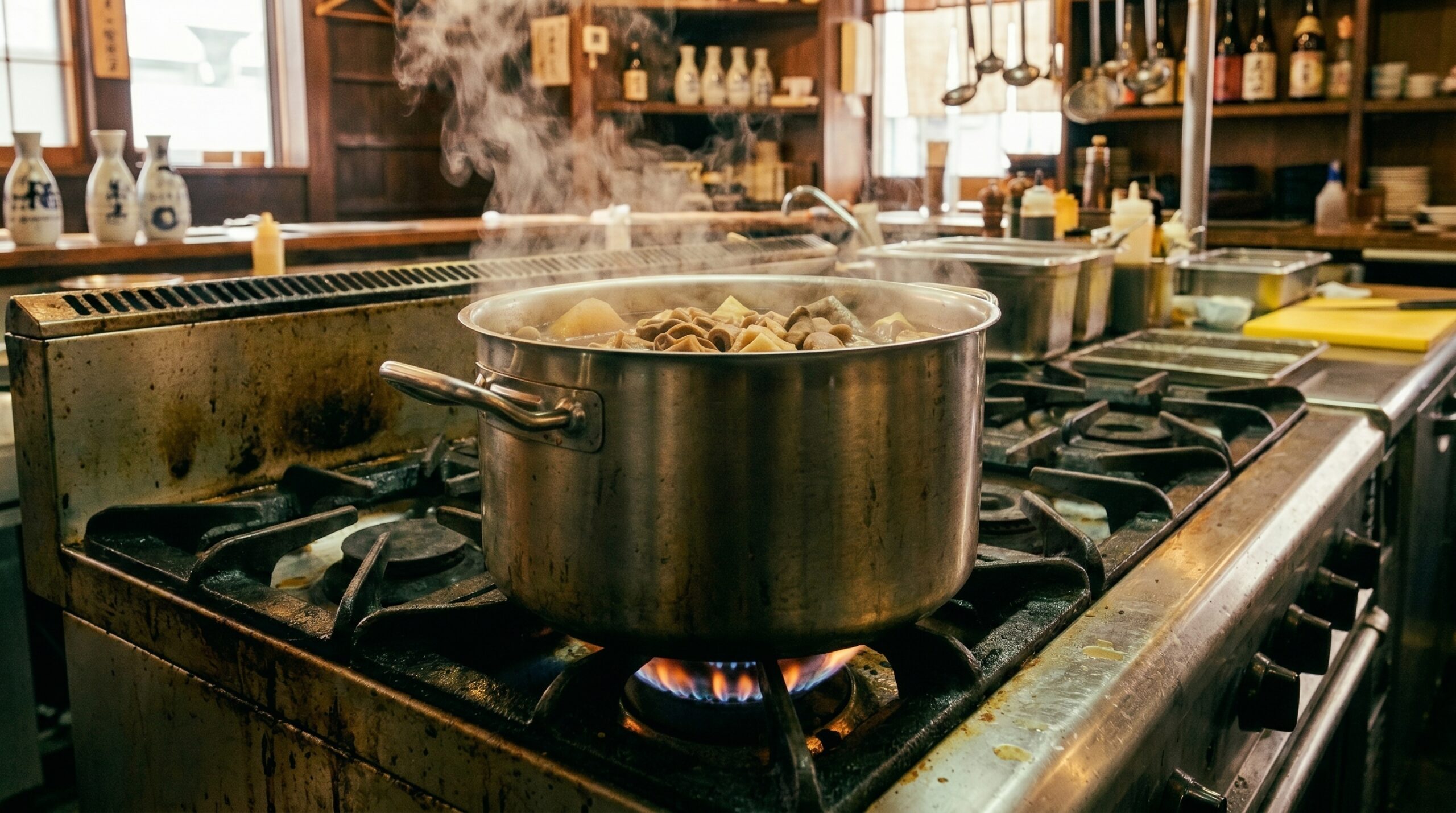
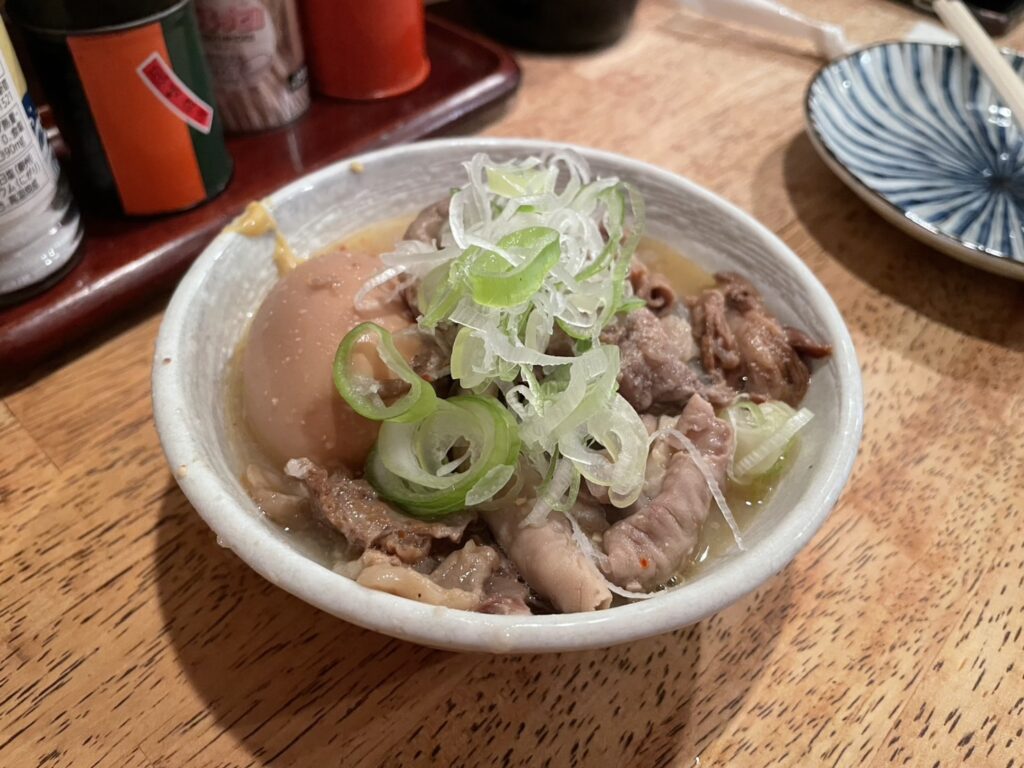
Nikomi is pork offal — intestine, tendon, stomach — stewed slowly in miso and sake until the meat is soft enough to cut with a chopstick. Tofu goes in. Konnyaku sometimes. The broth is dark and dense, thick with the collagen that’s been coming out of the meat for hours. It’s served in a small clay pot, still simmering, on a portable burner at your place.
It was not made for you. It’s been going all day.
煮込みは豚のホルモン——腸、スジ、胃袋——を味噌と酒でじっくり煮て、箸で切れるほど柔らかくなるまで煮込んだもの。豆腐も入る。こんにゃくが入ることもある。汁は濃く重く、何時間もかけて肉から出てきたコラーゲンでとろりとしている。小さな土鍋に入って出てくる——まだ煮えていて、席の卓上コンロの上に。
あなたのために作ったのではない。一日中ずっと火にかかっていた。
The logic of nikomi is accumulation. A pot that’s been going for one day tastes different from a pot that’s been going for a week — the flavors concentrate, the broth deepens, the ratio of components shifts as the cook adds what’s needed and removes what’s done. There are places in Tokyo where the same pot has been running, never fully emptied, for decades. I don’t know if this is legally true. I know the broth tastes like it.
煮込みの論理は蓄積だ。1日火にかけていた鍋は、1週間火にかけていた鍋と味が違う——風味が凝縮し、汁が深まり、必要なものを足して出来上がったものを取り出しながら配合が変わる。東京には、何十年もずっと同じ鍋を、完全に空にすることなく続けている店がある。法律的に本当かどうかは知らない。汁がそういう味がすることは知っている。
You eat nikomi slowly, between drinks, not finishing it in three bites and moving on. You’ll notice the difference each time you return to it. A truly good stew is one that tastes great even when cold.
煮込みは、飲み物の合間にゆっくりと味わうもので、3口で食べ終えて次に進むようなものではありません。そうすることで、食べるたびに味の違いに気づくでしょう。本当に美味しい煮込みとは、冷めても美味しくいただけるものなのです。


Leave a Reply