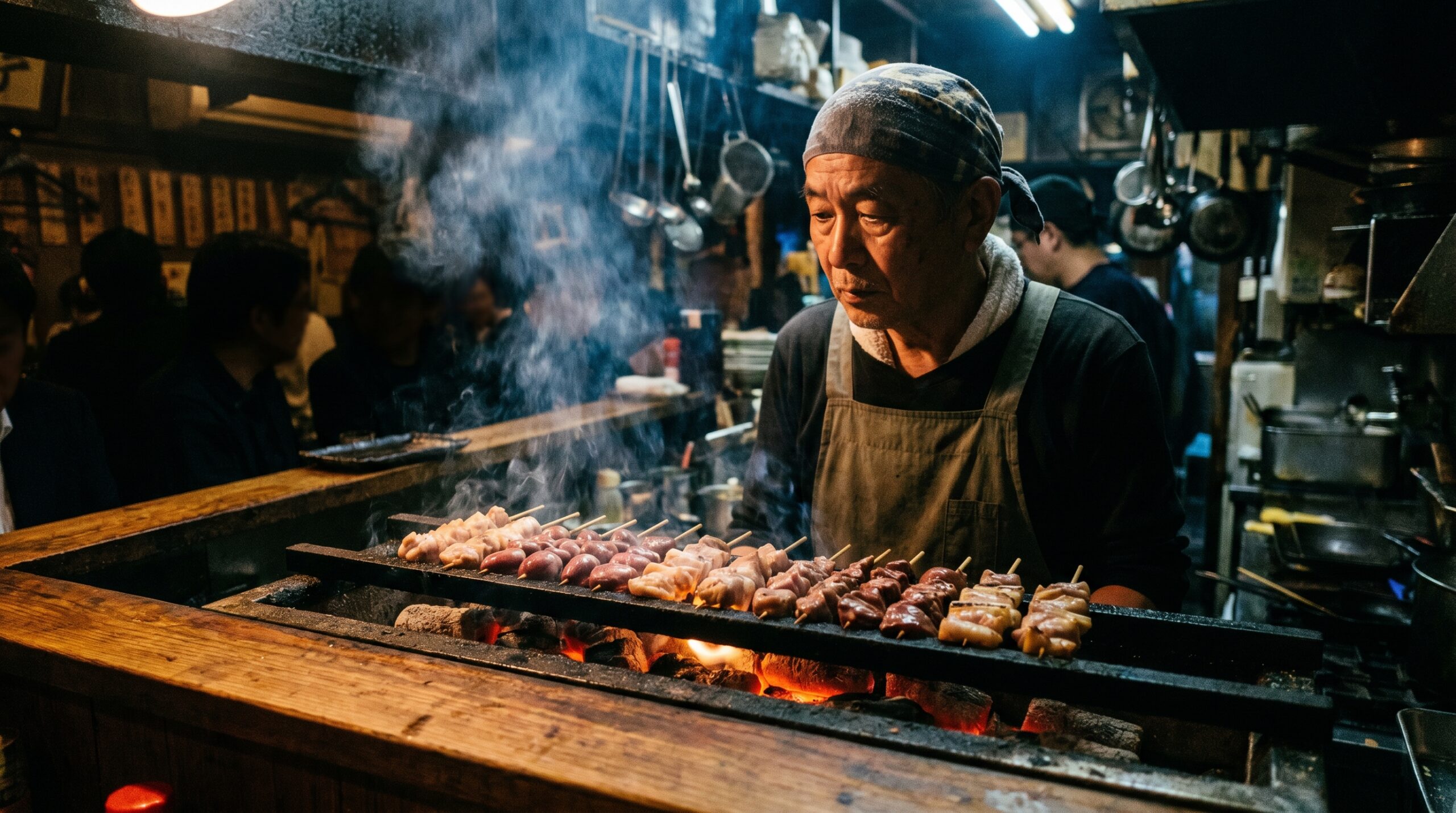
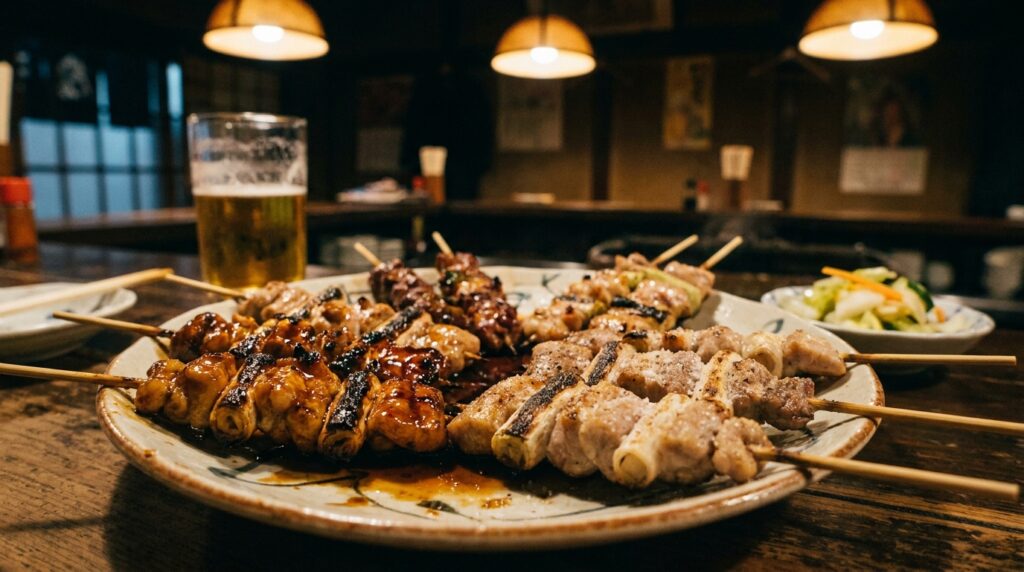
Yakitori is chicken on a skewer, grilled over charcoal. Yakiton is pork offal — heart, small intestine, diaphragm, various other parts — also on a skewer, also over charcoal. They are cooked the same way. They are not the same thing. Outside Japan, people use “yakitori” for both. Inside Japan, a yakiton place will let you know.
やきとりは串に刺した鶏肉を炭火で焼いたもの。やきとんは豚のホルモン——心臓、小腸、横隔膜、その他の部位——もやはり串に刺して炭火で焼く。焼き方は同じだ。同じものではない。日本の外では「やきとり」で両方を指すことが多い。日本の中では、やきとんの店が知らせてくれる。
Chicken forgives a little. The range between undercooked and overcooked is narrow, but it’s there — a few seconds of margin. Offal doesn’t forgive. Pork small intestine cooked wrong is either raw in the center or rubber on the outside. The window where it’s right is almost nothing. A place that consistently hits that window has been doing this for a long time.
Tare or shio — sauce or salt — is another variable. But it’s not simply a matter of preference. Each cut has a seasoning it belongs with: liver with tare, tongue with salt, shiro with tare, harami with miso tare. These pairings exist for reasons — the fat content, the texture, how the flavor opens under heat. A place that knows this doesn’t ask. It just brings the right one.
鶏はある程度許容する。火が通っていないと通りすぎの間の範囲は狭いが、ある——数秒の余裕。ホルモンは許容しない。豚の小腸を間違って焼くと、中が生のままか外側がゴムになる。正しい窓はほとんどない。その窓を一貫して射抜く店は、長くやっている。
タレか塩か——もう一つの変数だ。だが単純に好みの問題ではない。それぞれの部位には合う味付けがある——レバーはたれ、タンは塩、シロはたれ、ハラミは味噌だれ。このペアリングには理由がある——脂の量、食感、熱を加えたときに風味がどう開くか。これを知っている店は聞かない。正しいものをただ出す。
The Yotsuya place is a yakiton place that also does chicken. The owner doesn’t advertise this. The menu board just lists what’s available, in the order he decided. The tongue — tan — is the reason I go. It takes about twelve minutes to prepare correctly from the time you order. I’ve never once thought about leaving while I waited.
四谷の店はやきとんの店で、鶏もやっている。大将はこれを宣伝しない。品書きには何があるかが、彼が決めた順番で並んでいるだけだ。タンが私が行く理由だ。注文してから正しく焼くのに12分ほどかかる。待っている間に帰りたいと思ったことは一度もない。




Leave a Reply