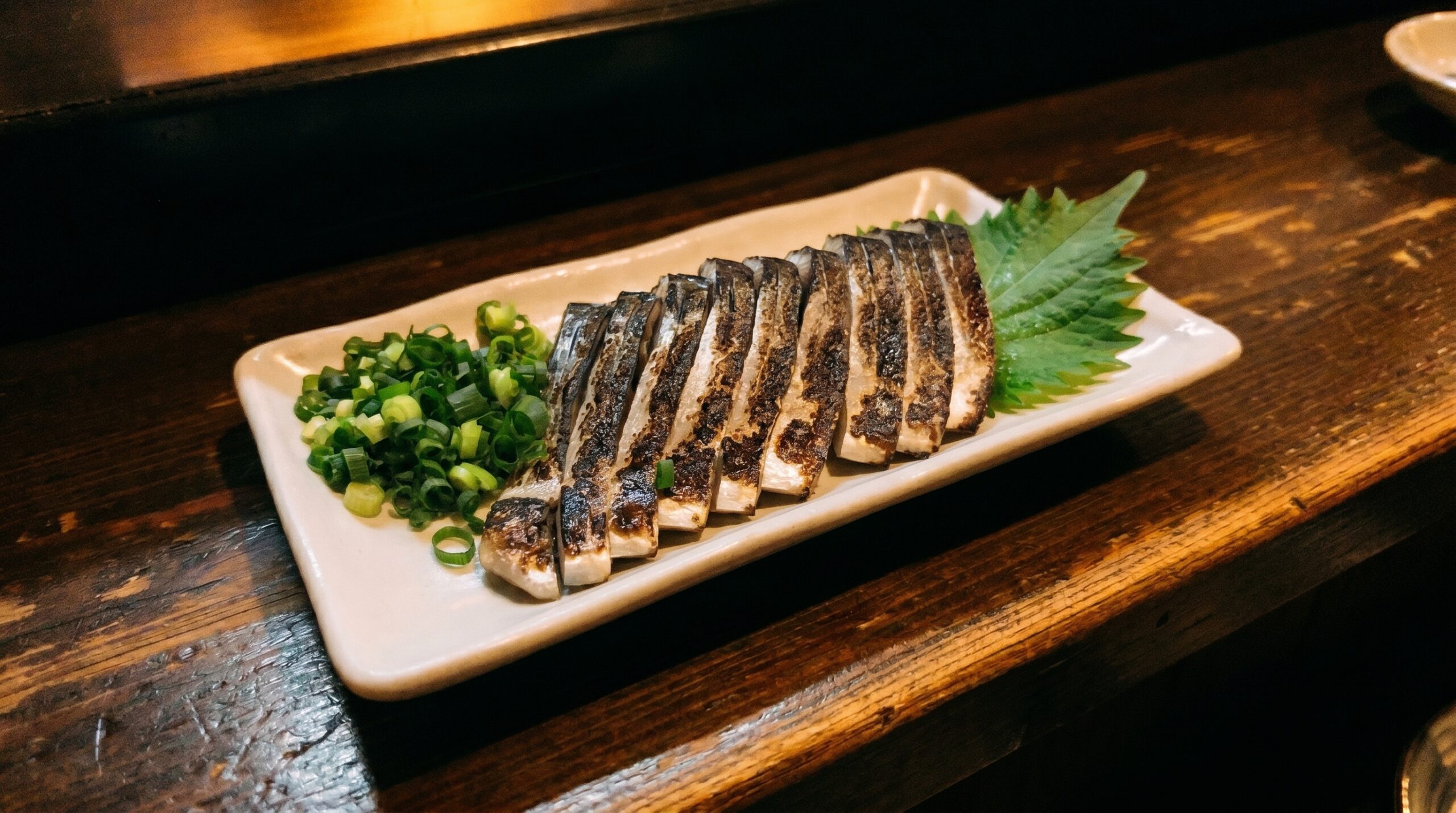
Shimesaba is mackerel that’s been cleaned, salted, then cured in rice vinegar for a few hours until the flesh firms and the flavor concentrates. You eat it sliced thin, cold, with ginger. It’s sharp and clean. The vinegar does most of the work.
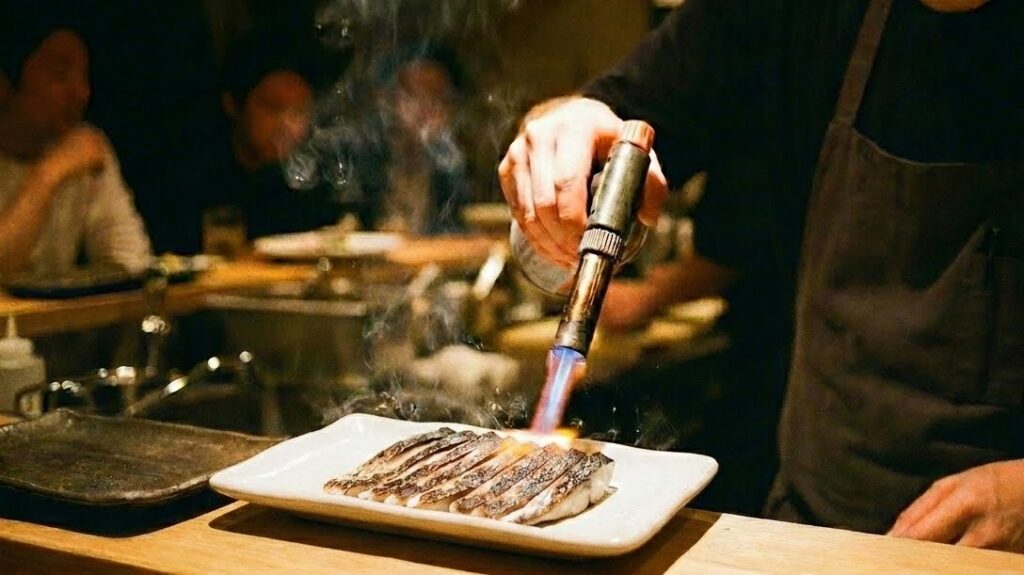
Aburi shimesaba is that same fish, then briefly torched — ten seconds, maybe fifteen — until the skin blisters and chars in spots and a thin layer of the flesh just below the surface warms and softens. The interior stays cold. The contrast between the two temperatures in a single slice is the point.
〆さばは鯖を洗い、塩をして、数時間米酢で締めて身を締め、風味を凝縮させたもの。薄く切って、冷たいまま、生姜と食べる。鋭くてクリーン。酢がほとんどの仕事をする。
炙り〆さばはその同じ魚を、一瞬バーナーで炙る——10秒、長くて15秒——皮が膨れて焦げ目がつき、表面すぐ下の薄い層が温まって柔らかくなるまで。中は冷たいまま。一切れの中の二つの温度のコントラストが重要だ。
The torch is a simple tool. What it requires is judgment — knowing when to stop. A few seconds too long and the heat penetrates too far and the whole point disappears. A few seconds too short and you get a fish that smells scorched without the textural change that justifies the scorching. The decision happens fast, in front of you, and there’s no fixing it afterward.
A place that does this well has made this mistake before and knows what it looks like.
バーナーは単純な道具だ。必要なのは判断——いつ止めるかを知ること。数秒多すぎると熱が奥まで入りすぎて、やる意味がなくなる。数秒少なすぎると、焦げた匂いがするだけで焦がすことを正当化する食感の変化が得られない。決断は速く起きる、あなたの目の前で。後から直しようがない。
これをうまくやる店は、前にこの失敗をして、どういう状態かを知っている。
The result, done right: the skin has char, the fat underneath has warmed and released, the flesh stays cool and firm from the cure. You eat it with ginger and a small amount of soy, if anything. The flavors don’t need much added.
正しくできたとき——皮に焦げ目があり、下の脂が温まって出てきて、身は締めたまま冷たく締まっている。生姜と、醤油を少しだけ——もし何かつけるなら。風味に足すものはあまりいらない。



Leave a Reply