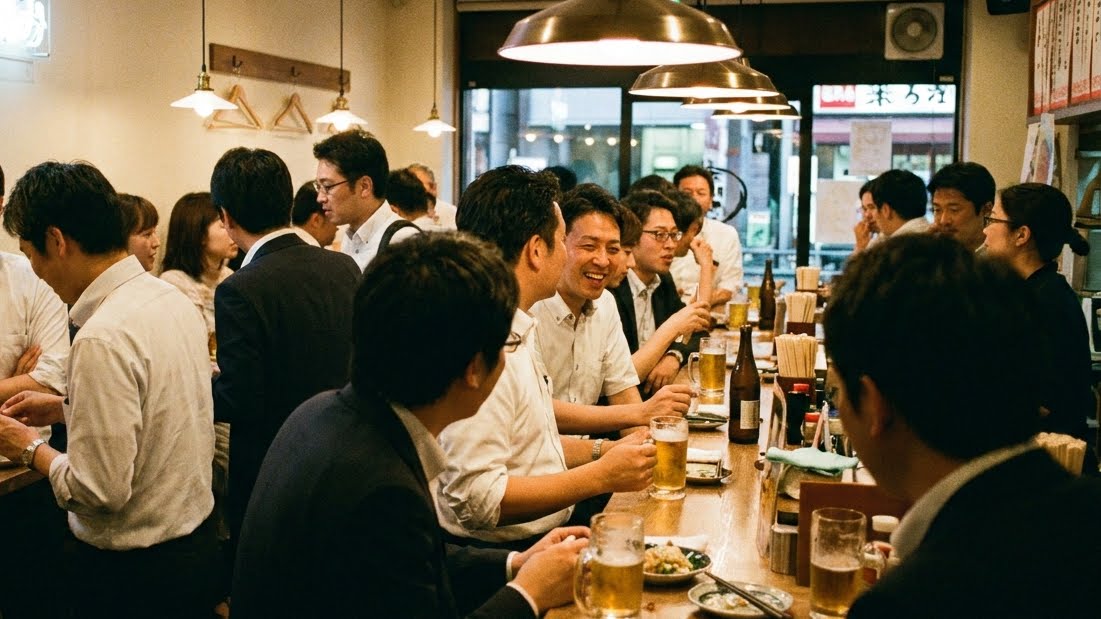
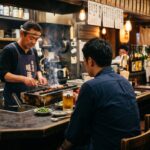
I was at the standing bar near Shibuya station on a Thursday. Five forty-five. The man next to me — suit still on, ID badge clipped to his pocket — drank his beer in eleven minutes and left. He’d arrived looking like his day wasn’t over. He left looking like it was.
Tachinomi. Standing drinking. No seats. Standing is not a compromise. Standing is the format.
渋谷駅近くの立ち飲み屋に木曜日に来た。5時45分。隣の男——スーツのまま、IDバッジをポケットに留めたまま——11分でビールを飲んで出ていった。来たときは一日がまだ終わっていない顔だった。帰りは終わった顔だった。
立ち飲み。座席なし。立つことは妥協ではない。立つことがフォーマットだ。
What standing does: it removes the settling-in process. You don’t take off your jacket, arrange your bag, claim a territory. You arrive, you order, you stand. This creates a different kind of presence — lighter, less committed. You can leave in three minutes or stay for an hour and a half. The exit is always easy. There’s no moment of “I should probably go” that requires negotiation with yourself.
立つこと、——腰を落ち着けるプロセスをなくす。ジャケットを脱いで、バッグを整えて、テリトリーを確保する、ということをしない。来て、注文して、立つ。これが別の種類の存在感を作る——より軽く、よりコミットしていない。3分で帰れるし、1時間半いてもいい。出口はいつも簡単だ。「そろそろ行かないと」という瞬間が、自分との交渉を要求しない。
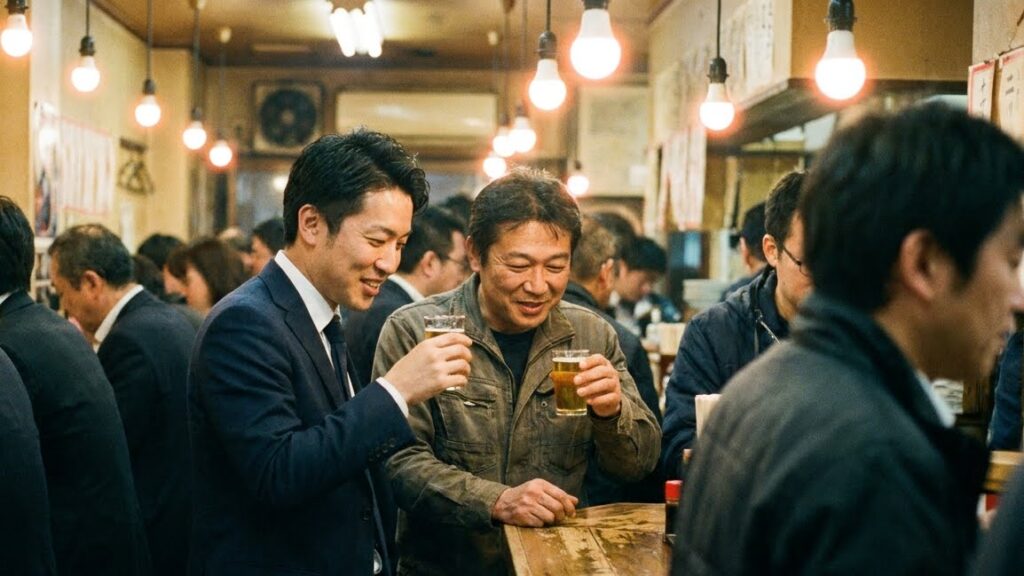
Tachinomi also flattens hierarchy in a way that seated bars don’t. When everyone is standing, there’s no head of the table, no power seat. The managing director and the junior staff are both just standing there, at the same height, holding the same cheap drink. This is actually significant. The standing bar near the station is one of the few places in Japanese professional life where rank becomes temporarily invisible.
立ち飲みはまた、座る形式にはない方法で階層を平らにする。全員が立っているとき、上座も権力のある席もない。部長も若手も、同じ高さで、同じ安い飲み物を持って立っているだけだ。これは実際に意味がある。駅近くの立ち飲み屋は、日本の職業生活の中で、序列が一時的に見えなくなる数少ない場所の一つだ。
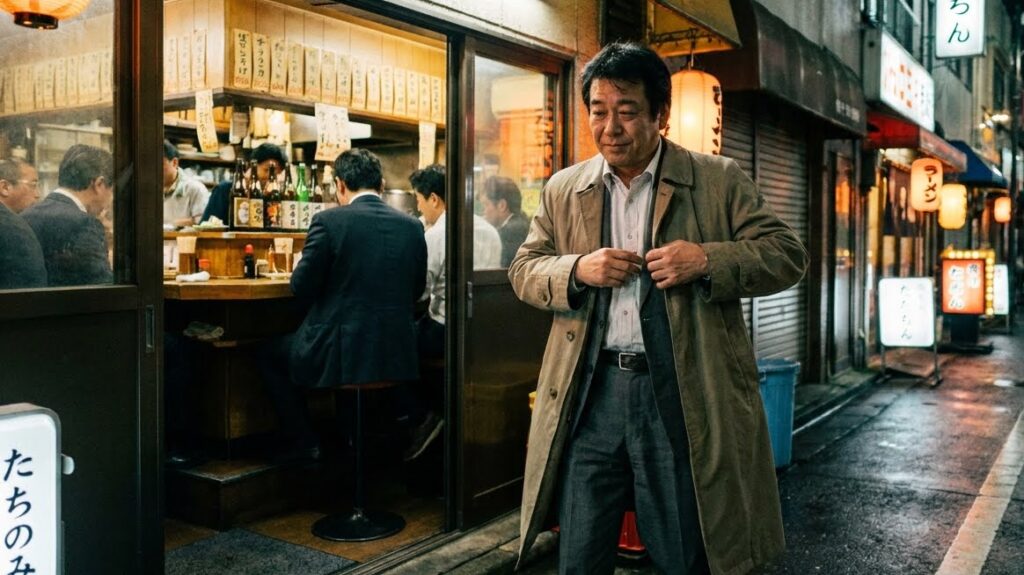
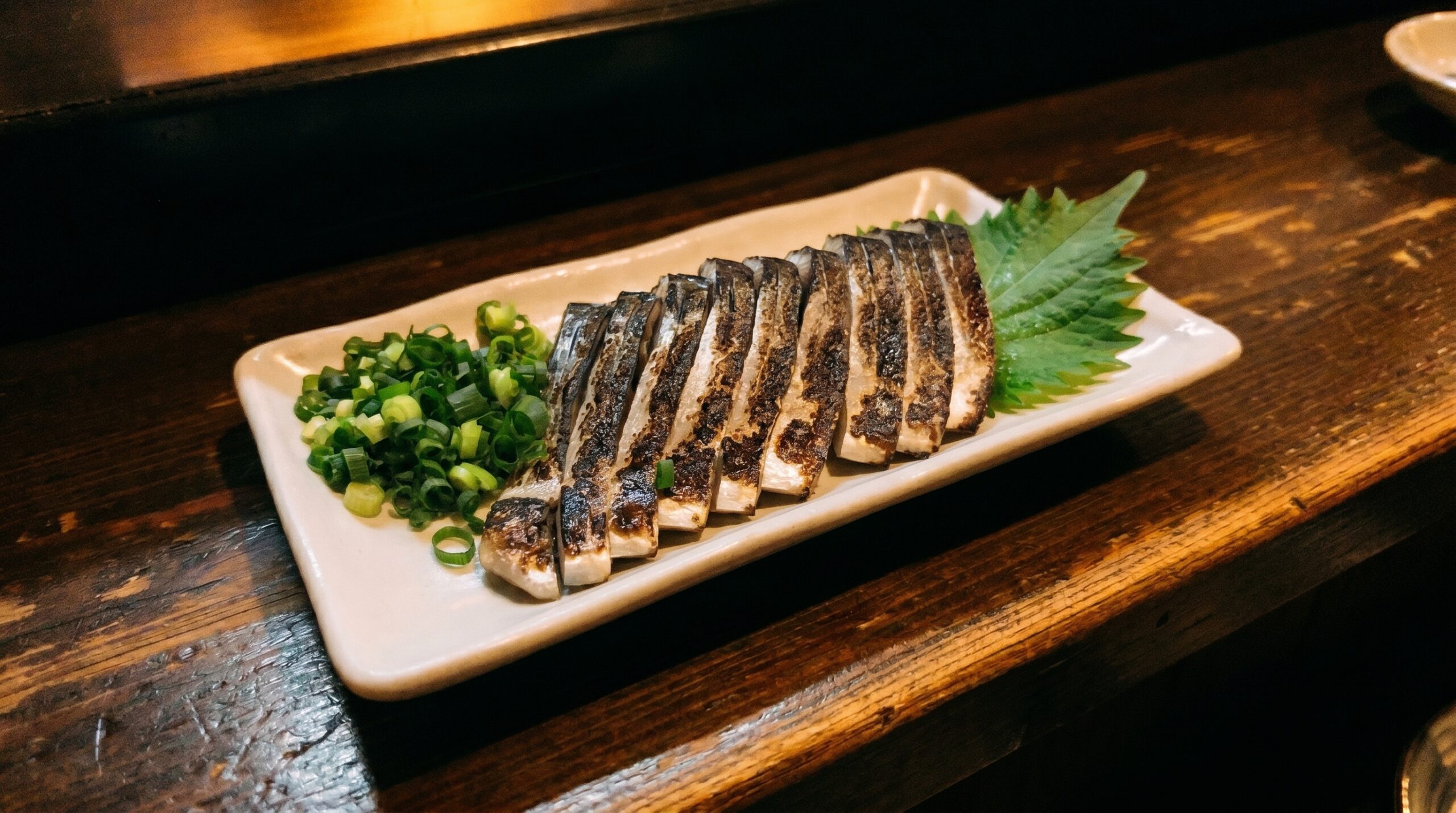
I go to the standing bar in Shibuya on Thursdays when I finish early. I’m usually there between five-thirty and seven. I stand, drink one or two, eat something small, and go. The whole thing costs maybe two thousand yen. I leave feeling like the day ended properly — not dragged into the apartment, but set down in the right place first.
Standing drinking. It’s faster, cheaper, and less complicated than sitting. Sometimes that’s exactly right.
渋谷の立ち飲み屋に、早く終わった木曜日に行く。だいたい5時半から7時の間にいる。立って、1〜2杯飲んで、何か小さいものを食べて、帰る。全部で2000円くらいだ。一日が正しく終わった感じがして帰れる——アパートに引きずり込まれるのではなく、まず正しい場所に置かれてから。
立ち飲み。座るより速くて、安くて、複雑でない。それがちょうど正しいときがある。

Leave a Reply