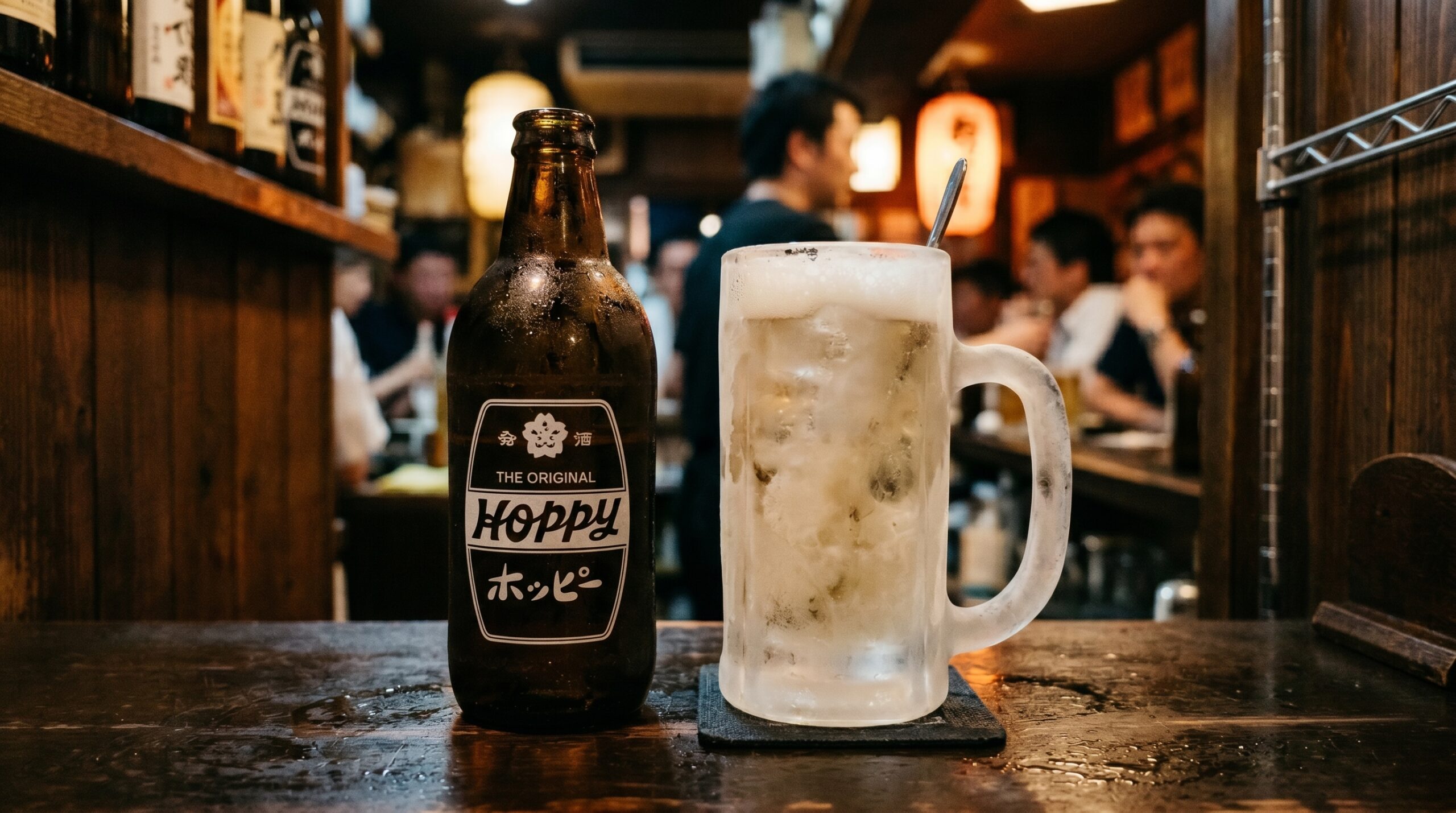
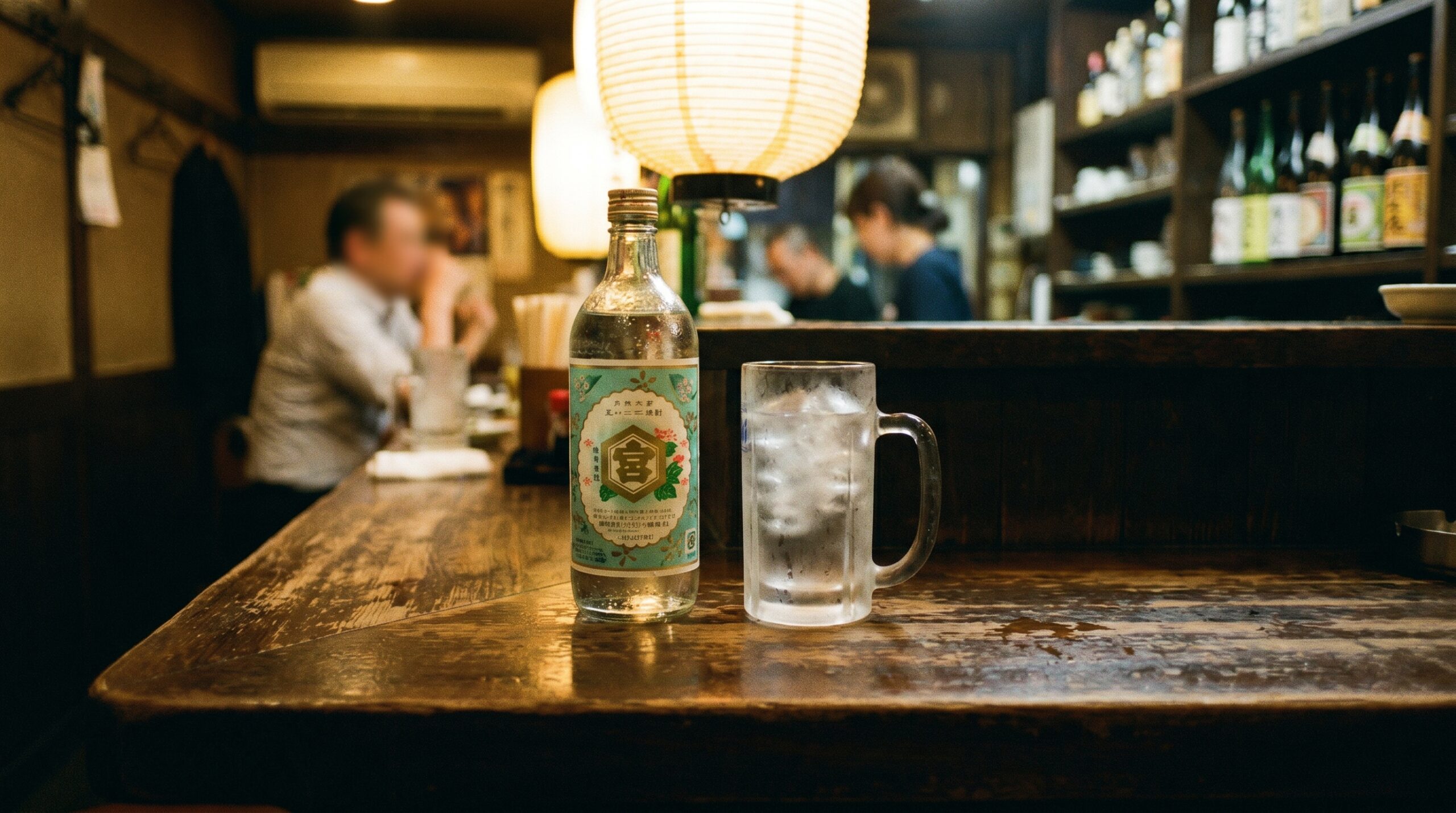
Hoppy is a low-alcohol, beer-flavored drink, invented in Tokyo in 1948 as a cheap alternative to beer. You mix it with shochu — spirit poured into a frozen mug first, then Hoppy added on top. The result tastes a little like beer, costs less than beer, and has less alcohol than beer. It never became fashionable. It never went away either.
I use it as a diagnostic tool.
ホッピーは低アルコールのビール風飲料で、1948年に東京でビールの安価な代替品として発明された。焼酎と混ぜる——まず冷凍したジョッキに焼酎を注いで、上からホッピーを加える。結果はビールに少し似ていて、ビールより安く、アルコールもビールより低い。流行ったことはない。消えてもいない。
私はこれを診断ツールとして使う。
Hoppy has a specific culture around it. The correct way: a frozen mug, shochu poured first (the naka), then Hoppy added on top. The right amount of naka fills the mug to about halfway. Not measured. Not discussed. Just halfway — without being asked. A place that does this is telling you something about itself. A place that gives you a thin pour of naka and calls it done is also telling you something.
When I sit down somewhere new, I sometimes order Hoppy first. Not because I especially want Hoppy. Because the response tells me things.
ホッピーには固有の文化がある。正しい方法——冷凍ジョッキ、まず焼酎(ナカ)を注いで、上からホッピー。ナカの正しい量はジョッキの半分くらいまで。計って注ぐのではない。確認するのでもない。ただ——聞かれることなく半分まで。半分まで注いでくれる店は、その店自身のことを何か伝えている。薄いナカをそれで終わりとする店も、また別の何かを伝えている。
初めての店に座ったとき、最初にホッピーを頼むことがある。特にホッピーが飲みたいわけではない。反応が教えてくれるものがあるから。
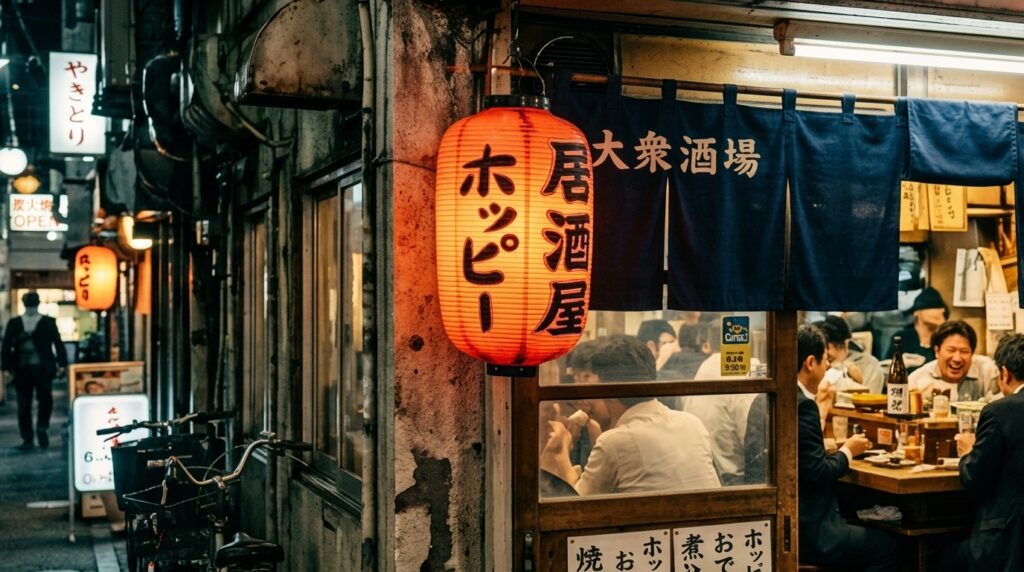
Hoppy is a working-class drink. It was cheap in the postwar years when beer was expensive, and the people who drank it then kept drinking it. *Shitamachi* Tokyo — the old low city, east of the river — has a particular relationship with Hoppy. Finding it in a place west of Shinjuku means something. Finding it done correctly means more.
ホッピーは庶民の飲み物だ。ビールが高かった戦後に安かったため、当時飲んでいた人たちがそのまま飲み続けた。下町東京——川の東の古い低地の街——はホッピーと特別な関係がある。新宿より西の店でこれを見つけることは何かを意味する。正しく出されるなら、さらに多くを意味する。
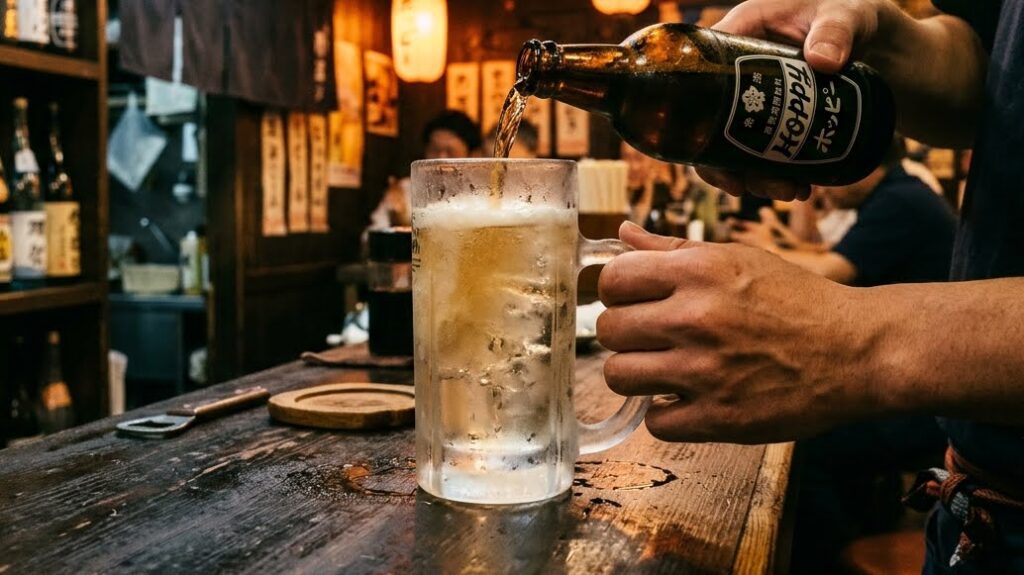
The place in Yotsuya does it correctly. Frozen mug, right ratio, Hoppy cold from the bottle. The owner never asks if I know what I’m doing when I order it. He just makes it. That quiet assumption of competence — on both sides — is what I was looking for.
四谷の店は正しく出す。冷凍ジョッキ、正しい比率、瓶から冷えたホッピー。注文するとき、大将はわかっているか確認しない。ただ作る。その静かな能力の相互前提——双方向の——が、私が探していたものだ。





Leave a Reply